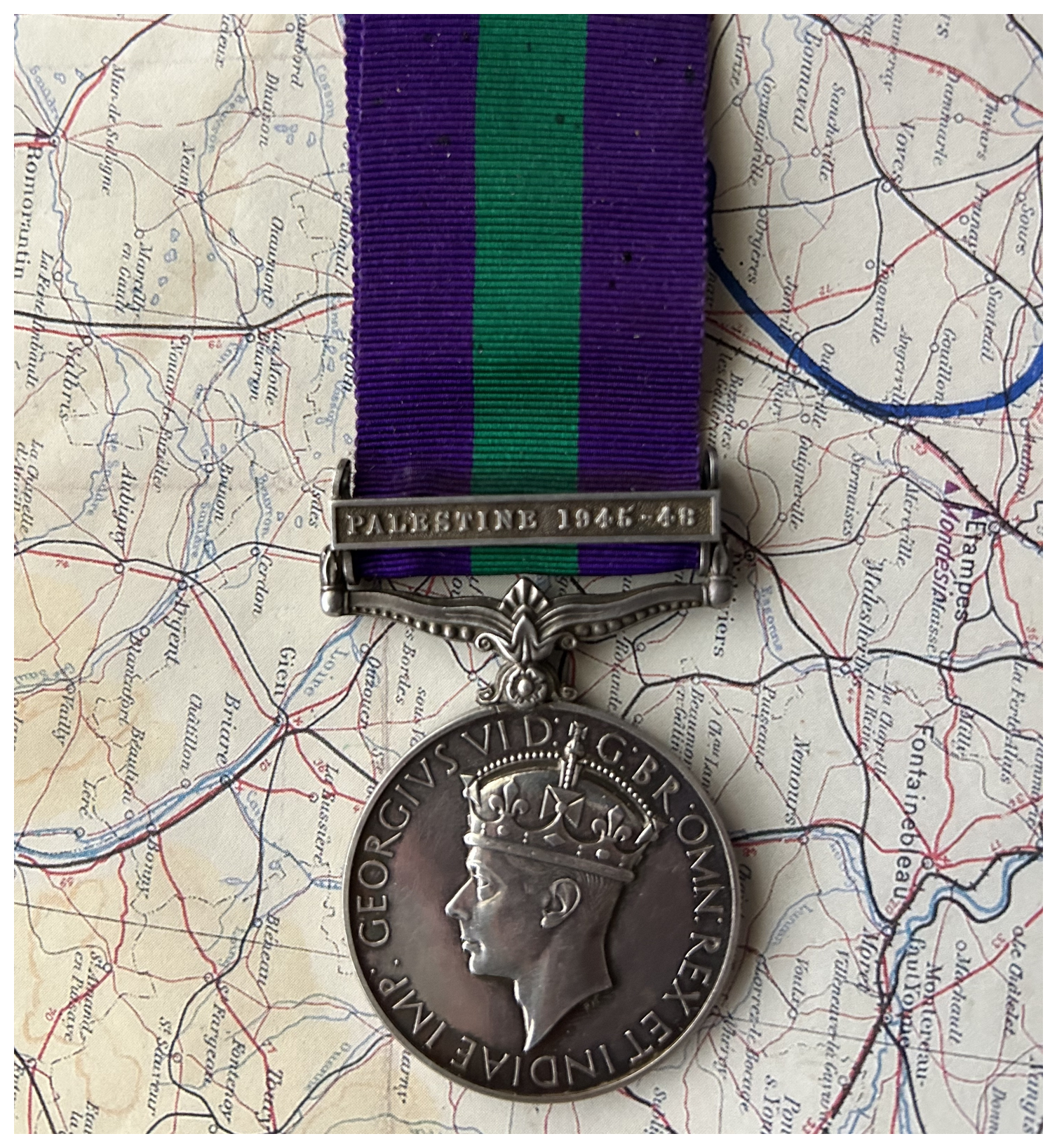
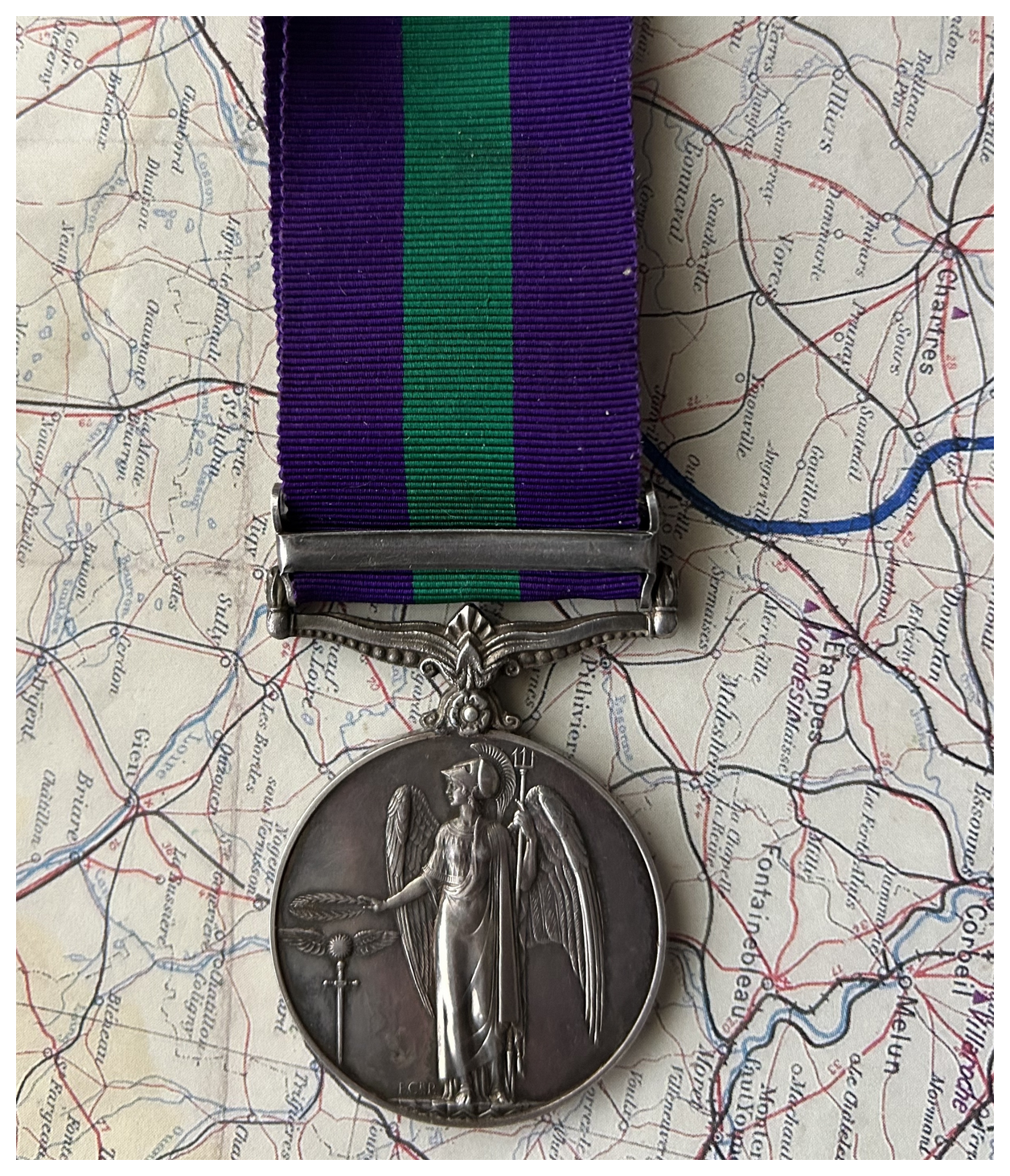
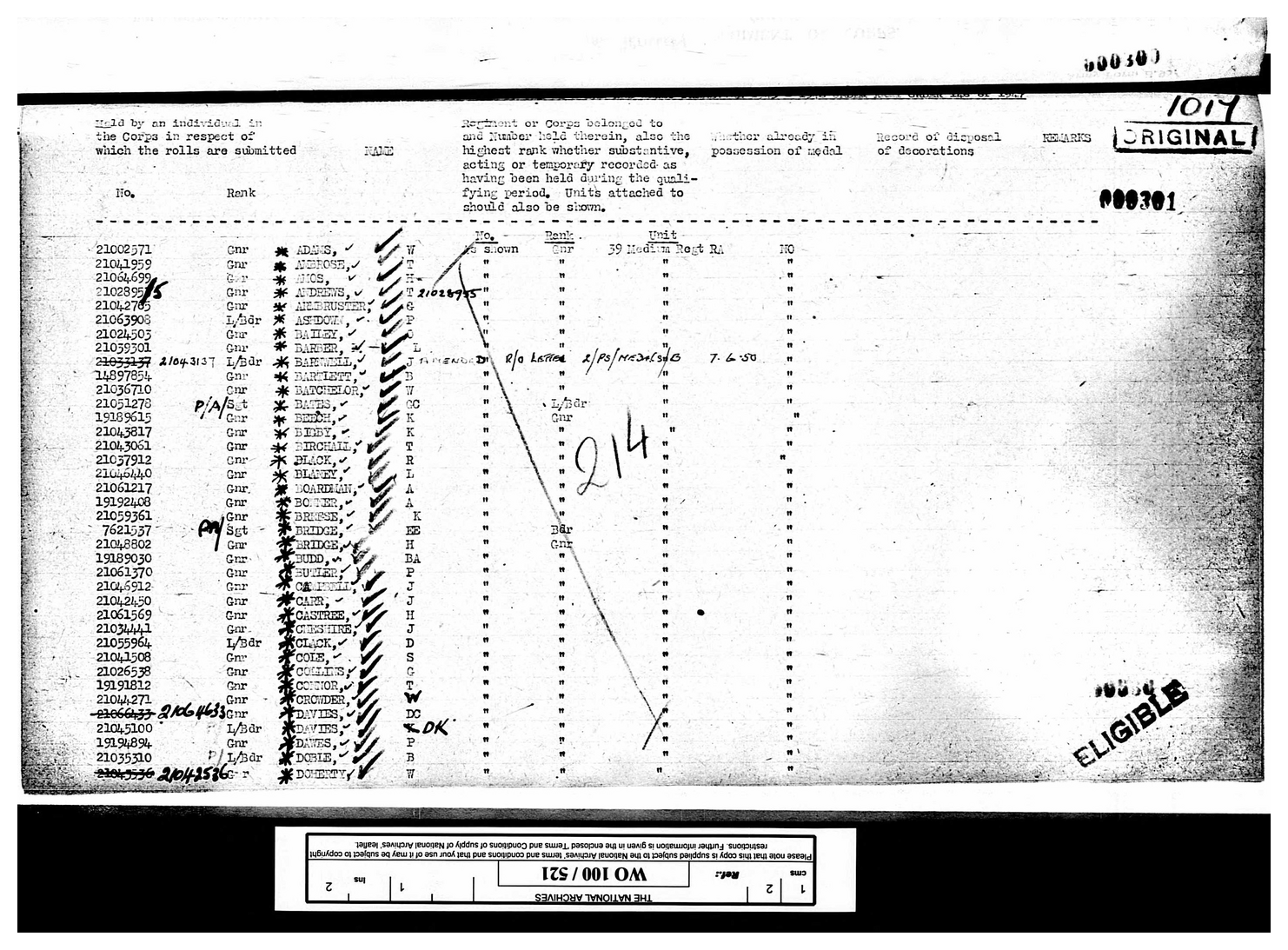
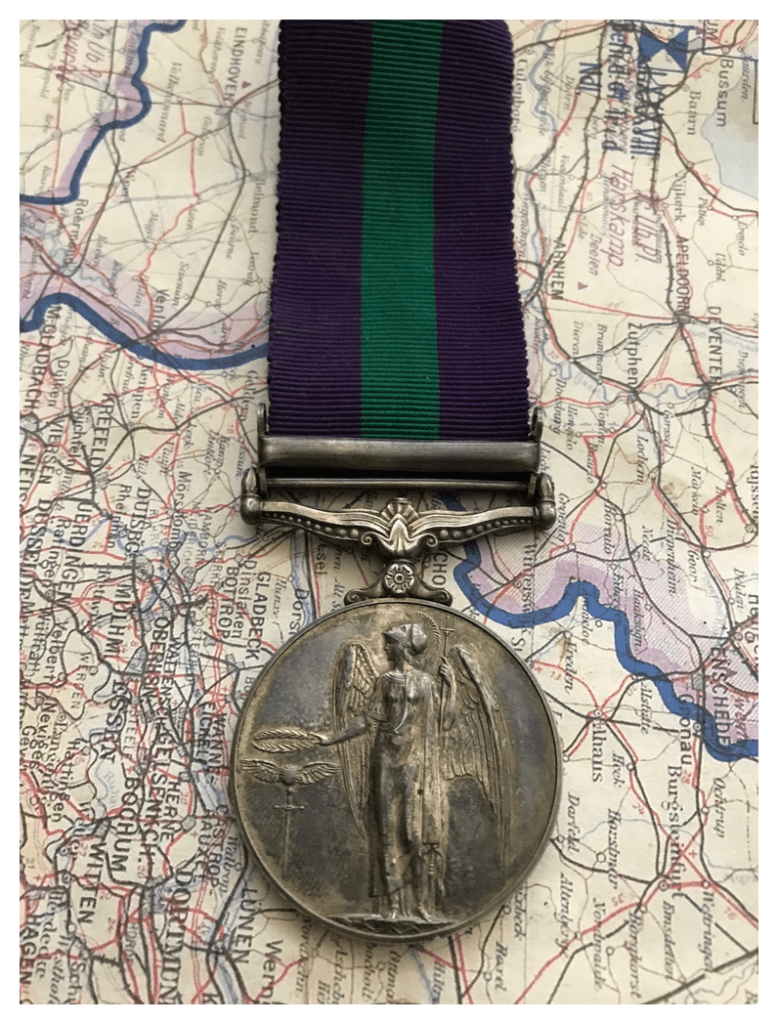
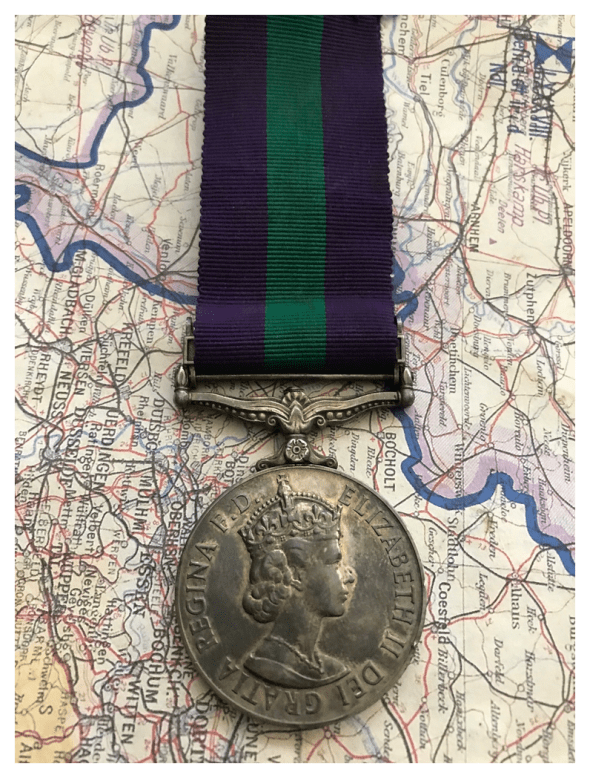
Yet another GVI General Service Medal with a 1945-1948 Palestine Bar attached. This is the GSM (1918) Medal with bar to Palestine 1945-1948 issued to Gunner T. Birchall, 21043061, Royal Artillery. He served in the 39th Medium Artillery Regiment.


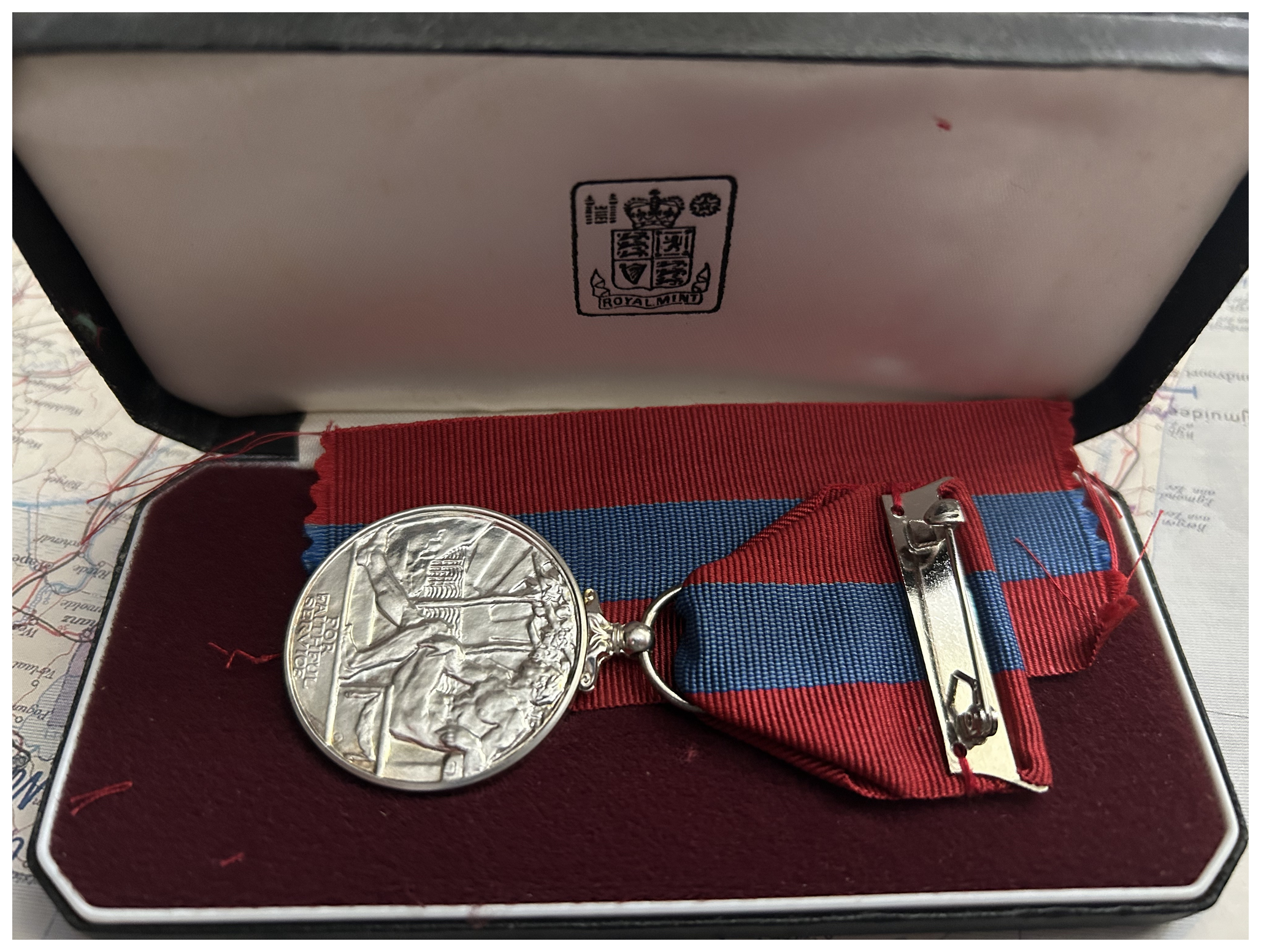
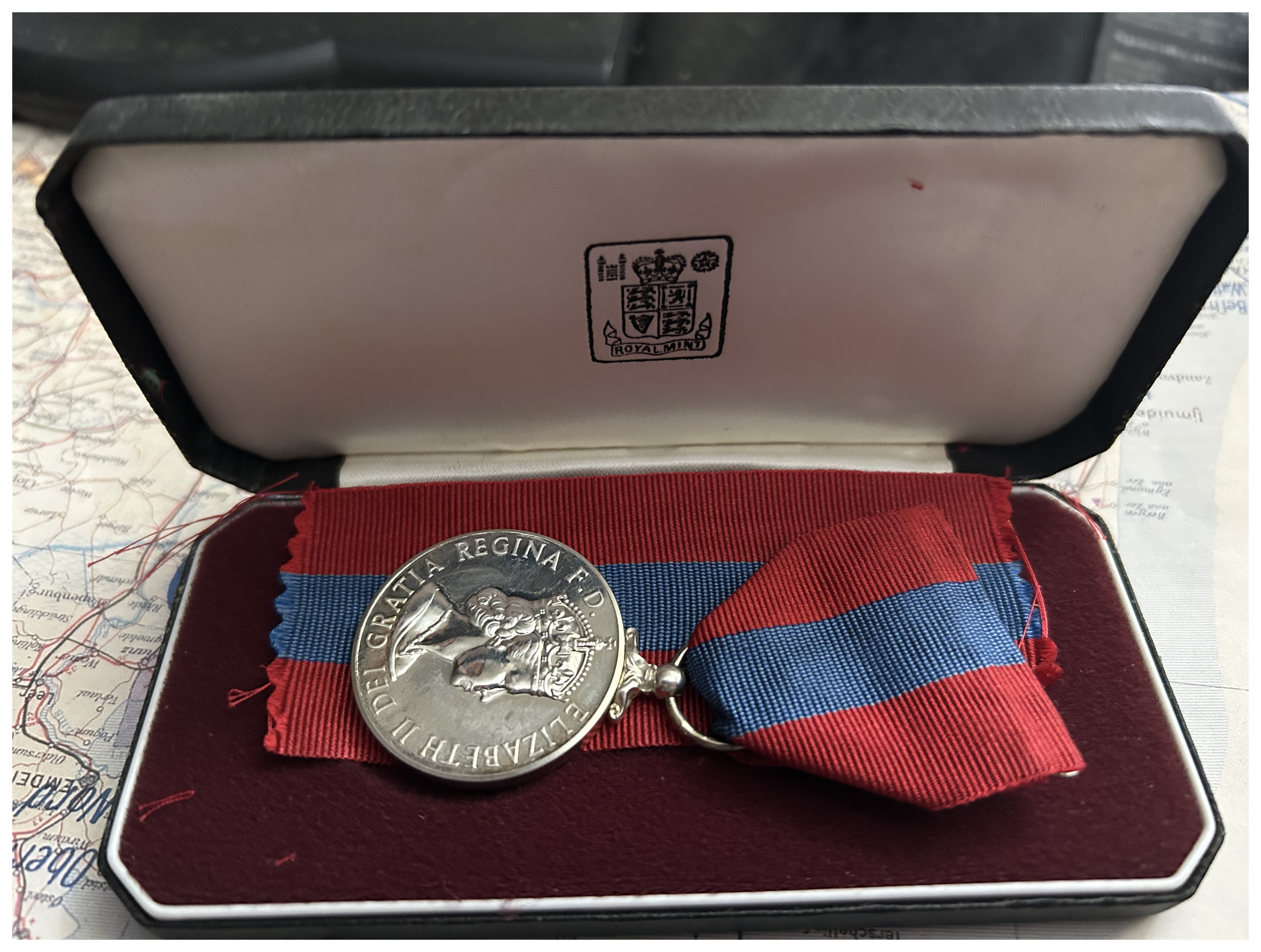
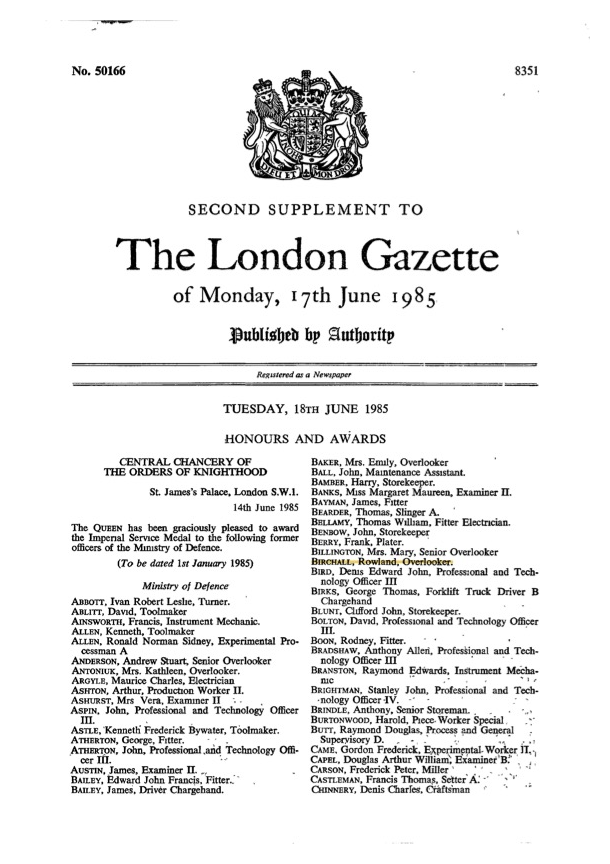
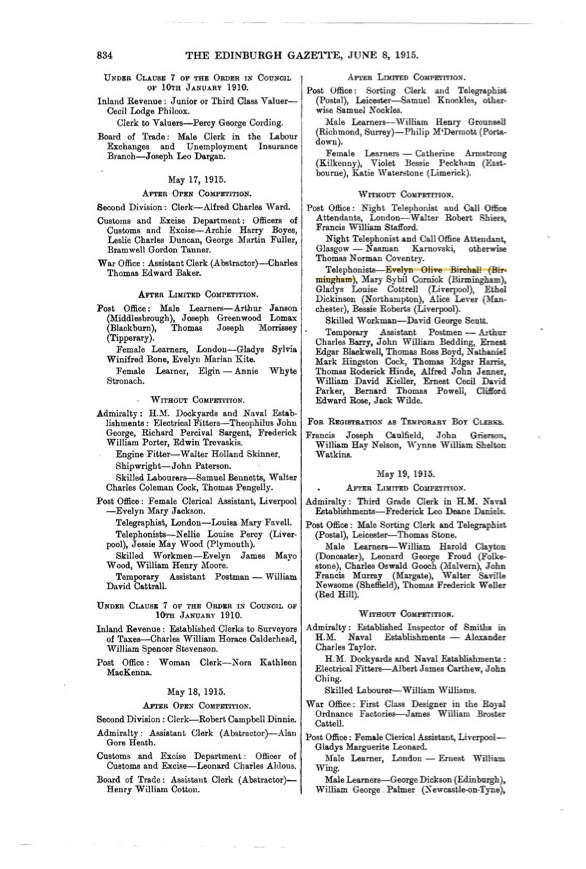
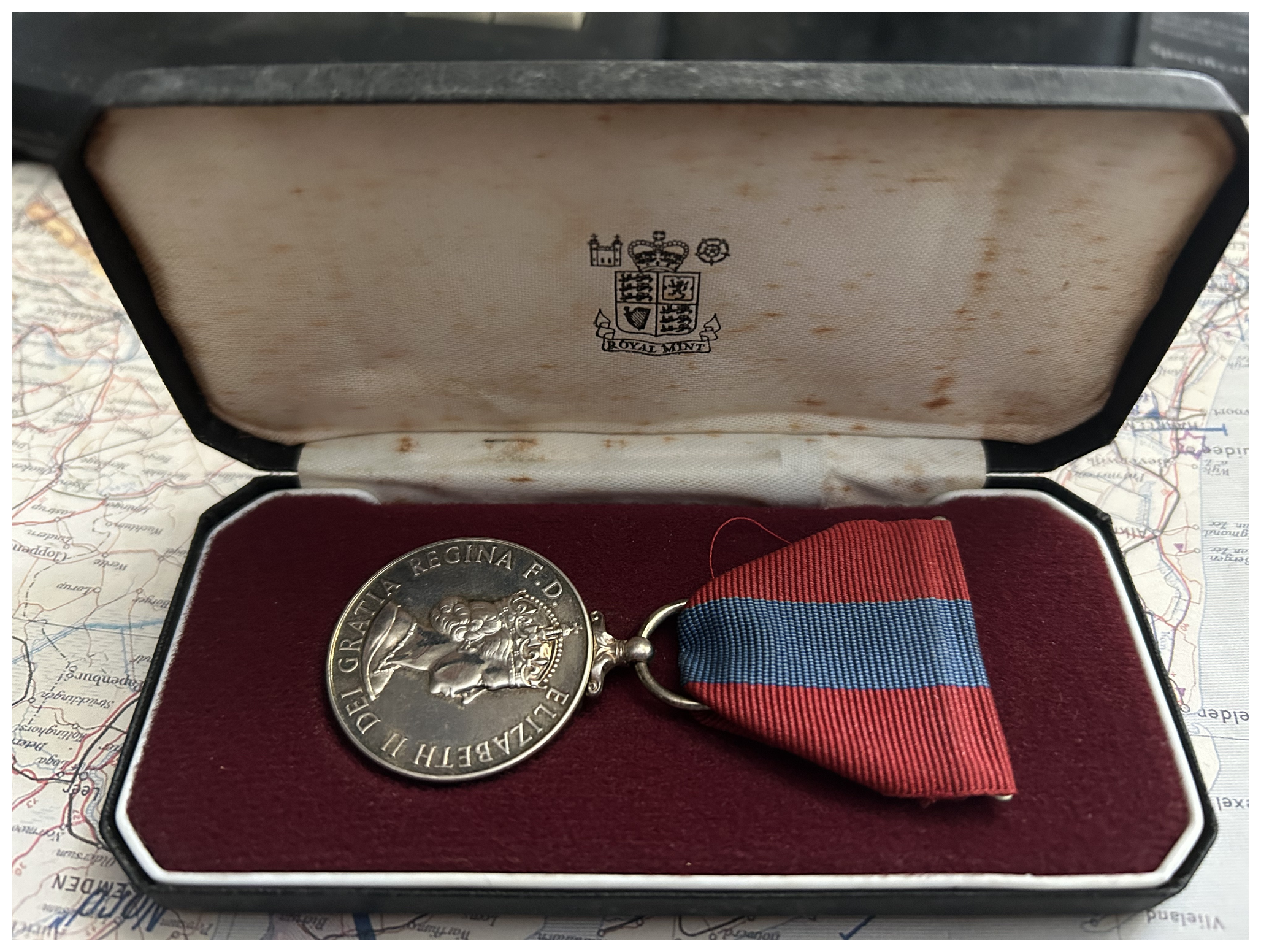
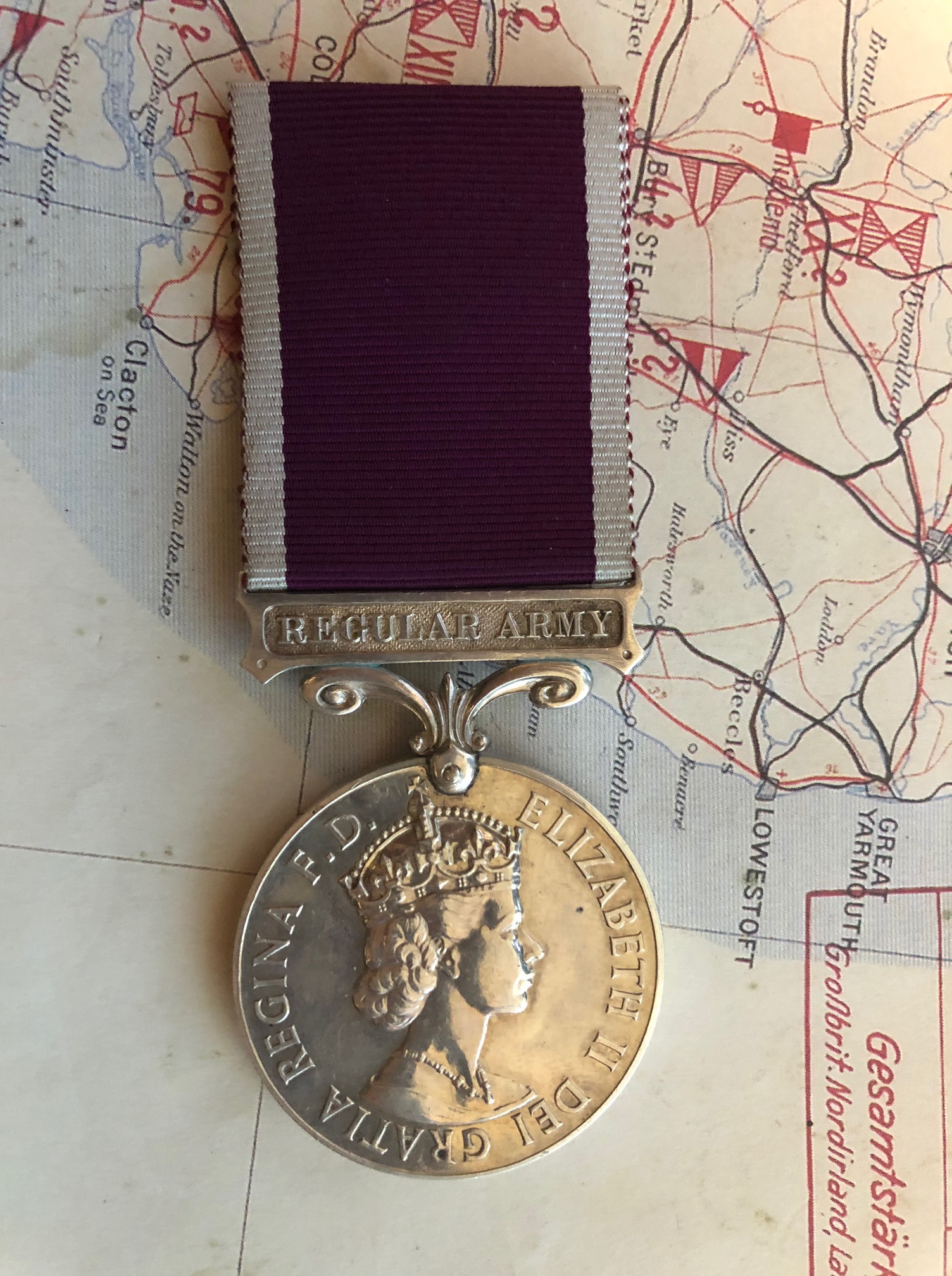
In my unrelenting hunt for medals to my surname I occasionally come across these Imperial Service Medals. Usually they are terrifically hard to find any real info on as the recipients are often faceless career public servants. This one here is named to a Miss Olive Birchall. I couldn’t find her in the gazette although I did find her entry into the Post Office as a telephonist in 1915.


It seems to be the year for orphans with this lonely General Service Medal (1918) with the bar for Palestine 1945-48. This particular example is impressed to 19143701 SPR P.J.BURCHELL R.E. As you can see by the medal roll Sapper Burchell made it to Lance Jack by the time the medal was issued. I have a Naval GSM to the same surname with the same bar.


Surprising this week, after a drought of a few months, a plain old garden-variety British General Service Medal (1962). The recipient is Gunner R. Birchall 23381785, Royal Artillery. The lack of any of the 14 possible theatre bars means he didn’t deploy from the UK during his service.


It has been a good month for finding Birchalls on the intertubes. This GVI GSM is impressed to 23522812 PTE J.BIRCHALL RAOC. Because this is a GVI issue GSM, Private Birchall must have served early in the Emergency, prior to 1956. Interesting side note, it was called the Malayan Emergency because if it had been a war, then insurers would have been able to refuse claims for damage.
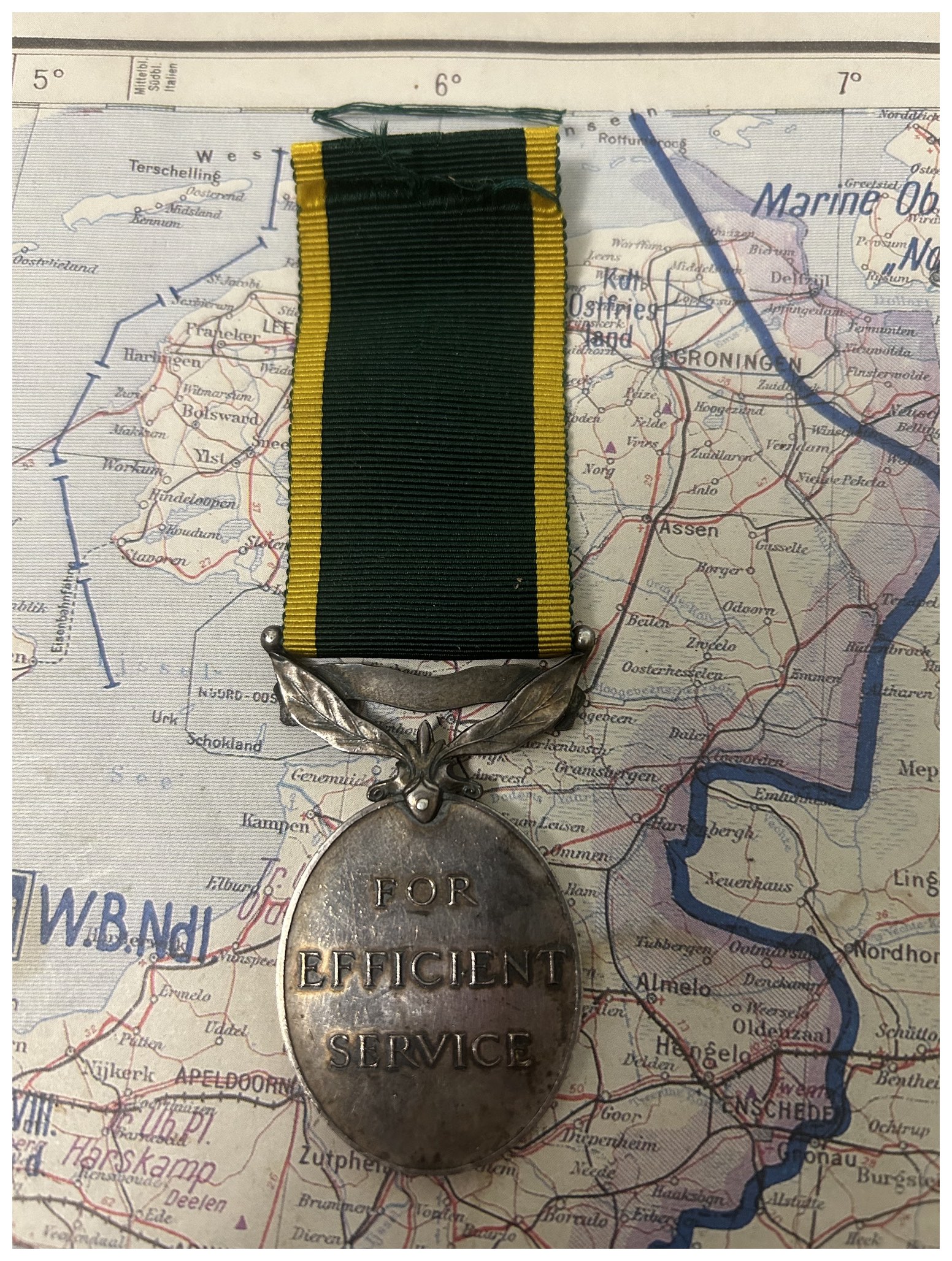
In my never ending quest to find and reunite medals to my family surname, usually it’s months of dross with the occasional excellent find. This group falls into the latter. This group is impressed to W.O. 2nd Class F.Birchall, 5.D.G and Lt. F Birchall, 5.D.G.
Frederick served in N.W. Europe, landing through Normandy with the Regiment in July, 1944. He fought through Belgium, the Roer and into Hamburg in 1945. After returning to the U.K., the Regiment was sent to Korea, where Frederick was awarded an MID as well as a short service commission as Lieutenant.
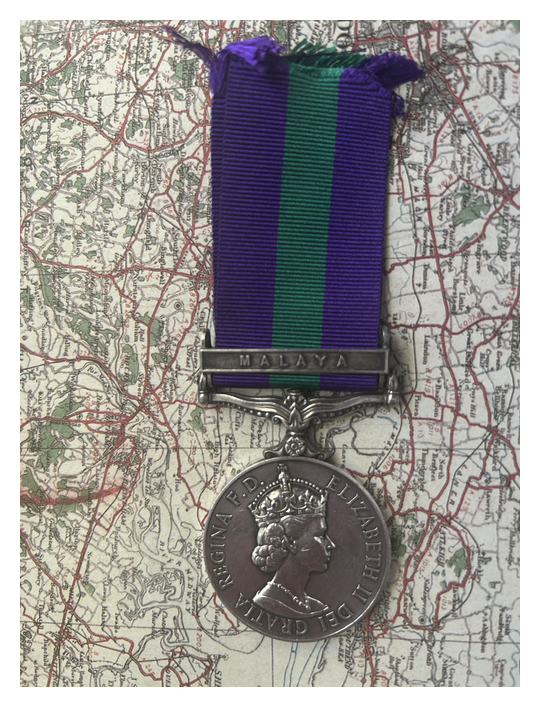
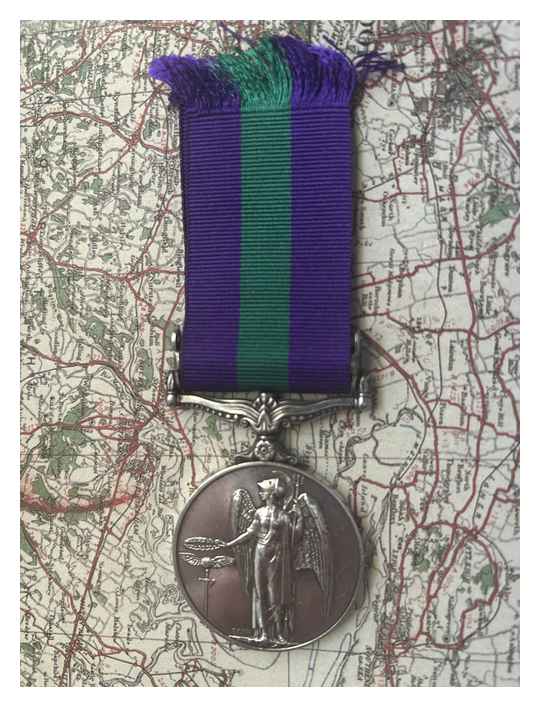
In my never-ending quest to find all the Birchall or similar named groups and singles on the internets, there is this example in the post this week. Named to 23416889 SIGMN.J.I.BIRCHELL R.SIGS., it is a EIIR General Service Medal with a bar for the Malayan campaign against the communist insurgency. This post-colonial bush war ran from 1948 to 1960 and was one of the few successful attempts to keep the communists out of S.E.Asia.
This is a commemorative medal celebrating the 70th anniversary of the IMT trials of the major criminals in Nuremberg starting in 1946. The medal is Russian in origin but since I don’t see it listed online as an official commemorative I am going to assume it’s an unofficial “tin” medal. The words on the reverse mean “Fascism will not stand”.
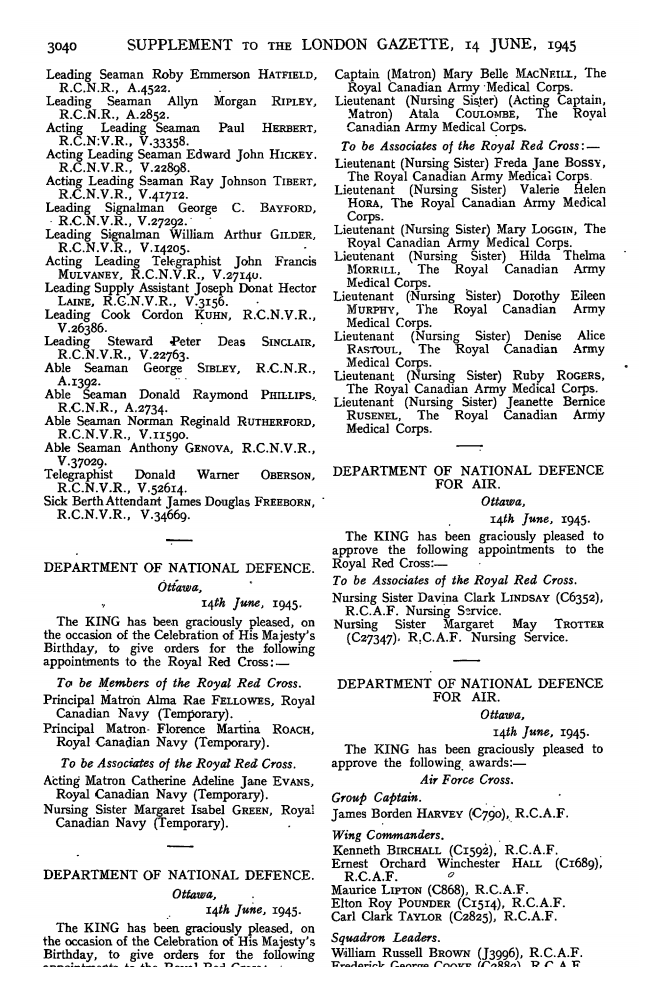
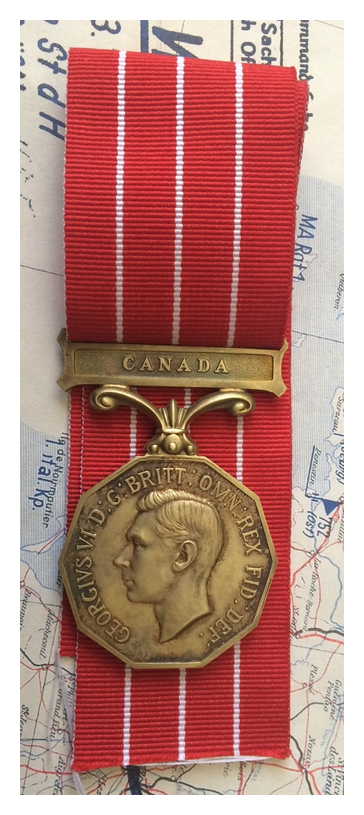
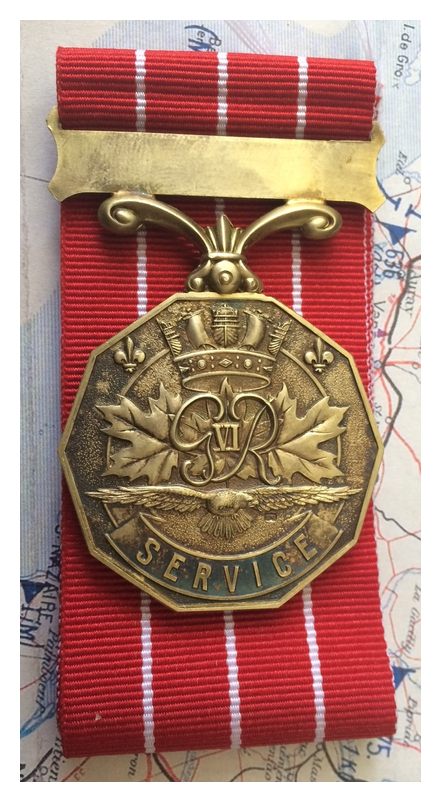
This medal is a GVI Canadian Efficiency Decoration awarded to Wing Commander Kenneth Birchall (C1592). Ken was born in Ottawa on the 17th of March 1916. He attended the technical school in Ottawa and went on to become a Pilot-Sergeant in the RCAF, later enlisting in 1939 in Dartmouth, Nova Scotia.
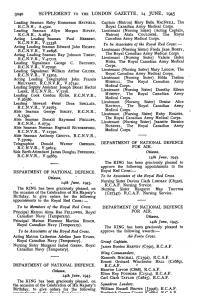
The Ottawa Journal records his promotion to Flying Officer (Temporary) in January 1940. He went on to complete two tours in bombers over France and Germany and then returned to Canada. He served as the Chief Instructor at No.2 Bombing and Gunnery School at Mossbank in Manitoba. In the 14 June 1945 London Gazette he was gazetted for the Air Force Cross (AFRO 1127/45 dated 6 July 1945). Ken had completed 1,502 hours flying as of date of award. The award was presented 1 April 1949.
The blurb for the award is as follows…
“Wing Commander Birchall, during the period of his employment as chief instructor at No.2 Bombing and Gunnery School, has produced outstanding results in training efficiency. Through devotion to duty and untiring effort he contributed in great measure to raising and maintaining the efficiency and morale of this station at a very high level. His service has been outstanding for the past five years and during that period he has made a valuable contribution to the prosecution of the war.”
Aside from the missing AFC, Ken would also be entitled to the Victory Medal, the 1939-45 Star, the Air Crew Europe Star, the Defence Medal and the CVSM with Overseas Bar.
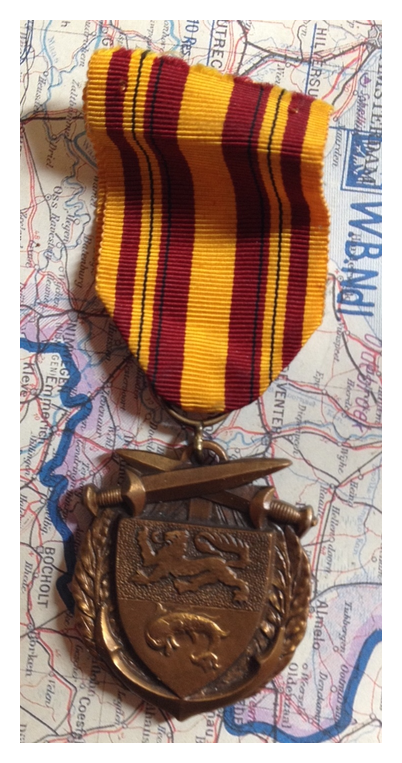
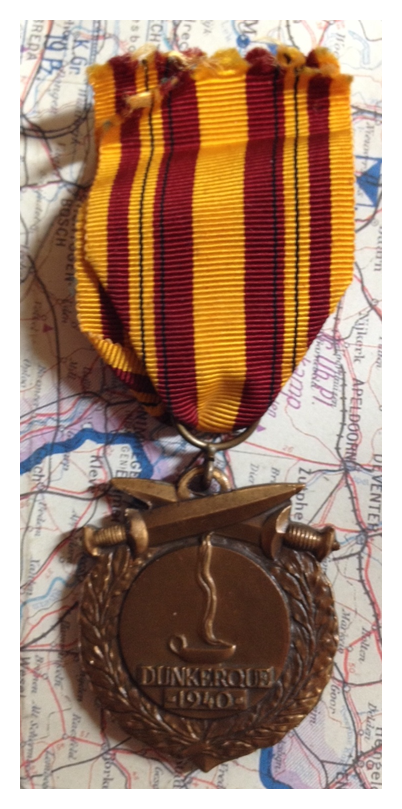
This is a 1960 commemorative medal, issued through the Dunkirk Veterans Association (now disbanded) and subsequently managed by the French National Association of Veterans of the Fortified Sector of Flanders and of Dunkirk. This is my second example and I like it better because, surprisingly, I think the other one is an accursed fake! This one has much better quality characteristics.
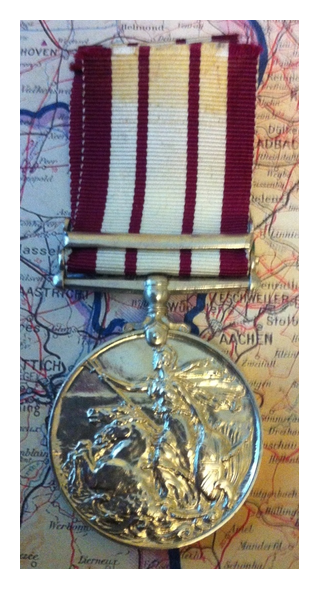
This Naval General Service Medal, impressed to C/JX 155864 E.Burchell A/B R.N. has the 1945-1948 Palestine Bar. Most of the naval personnel involved in this brush fire war were offshore patrol craft crews attempting to interdict arms and illegal immigrant traffic into what was still the British Mandate territory of Palestine.
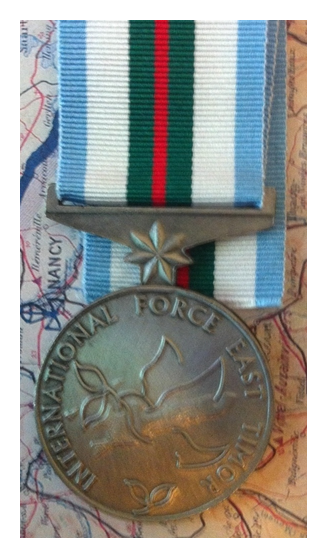
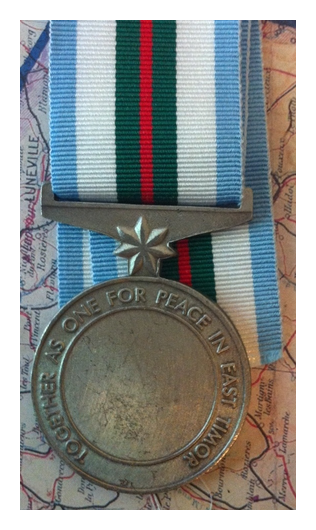
The International Force East Timor (INTERFET) Medal recognises members of the Australian Defence Force who served for 30 days (or 30 sorties) in East Timor during the INTERFET campaign (16 September 1999 – 10 April 2000). The qualifying area comprises East Timor and the sea adjacent to East Timor out to a distance of 12 nautical miles (22 km) from the low water mark.
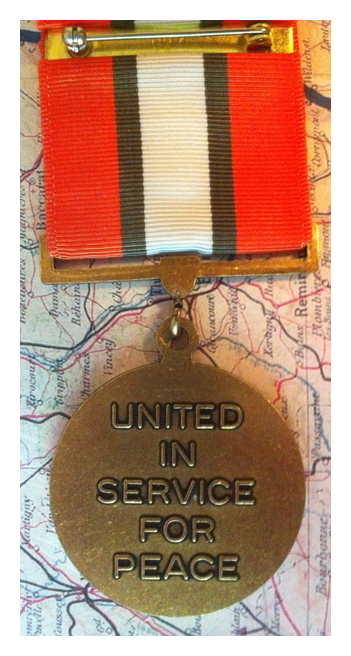
The Multinational Force and Observers (MFO) is an international peacekeeping force overseeing the terms of the peace treaty between Egypt and Israel. This is the MFO Service Medal.
The Multinational Force and Observers Medal is an international military decoration which was first created on March 24, 1982. The medal was established under the authority of the Director-General of the Multinational Force and Observers (MFO) which were established to monitor a neutral ceasefire zone, between Egypt and Israel, as the result of the Yom Kippur War of 1973.
The MFO is not a UN mission, but rather a multi-national force created by the annex to the Israeli-Egyptian Peace Treaty.
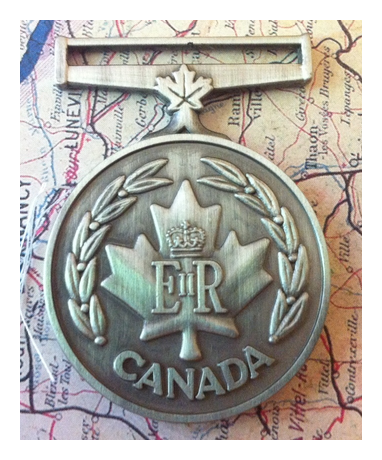
Canadian Peacekeeping Service Medal (French: Médaille canadienne du maintien de la paix) is a campaign medal created in 1988 to recognize the contributions of all Canadian Peacekeepers towards the ultimate goal of peace, after the United Nations Department of Peacekeeping Operations was awarded that year’s Nobel Peace Prize. Go Canada!
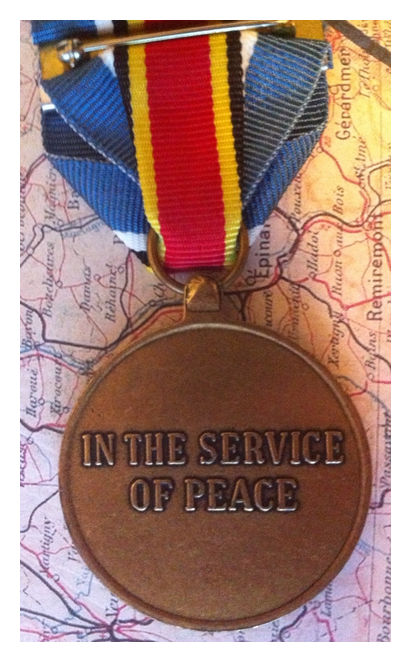
The United Nations Integrated Mission in East Timor (UNMIT) was established on August 25, 2006 by UN Security Council Resolution 1704. Its objectives are “to support the Government in consolidating stability, enhancing a culture of democratic governance, and facilitating political dialogue among Timorese stakeholders, in their efforts to bring about a process of national reconciliation and to foster social cohesion”. In its most recent resolution on UNMIT, the Council extended its mandate until February 26, 2012. UNMIT and ISF troops will leave the country at the end of 2012.
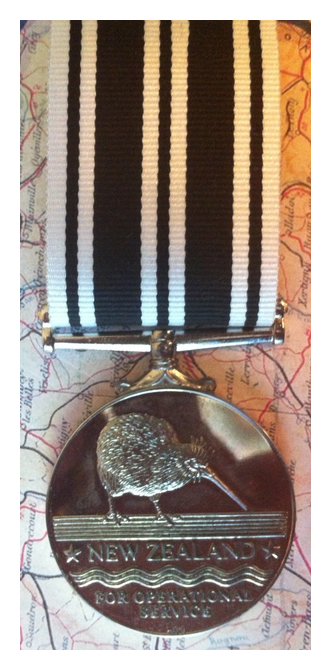
The New Zealand Operational Service Medal (NZOSM) is a New Zealand campaign medal for award to New Zealanders who have served on operations since 3 September 1945. The medal was instituted in 2002 to provide specific New Zealand recognition for operational service. It is awarded in addition to any New Zealand, Commonwealth or foreign campaign medal. It is awarded once only to an individual, regardless of how many times he or she has deployed on operations.
These are issued unnamed.
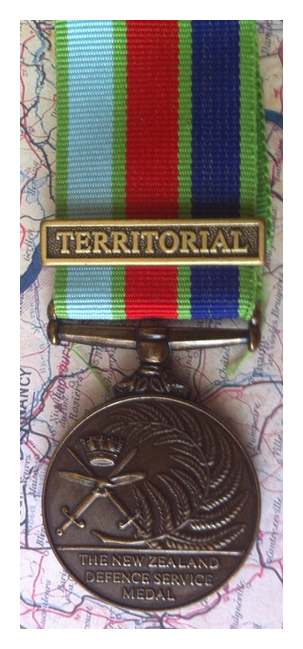
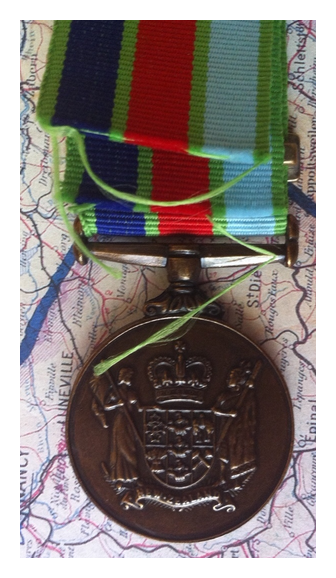
This is a modern issue New Zealand Defence Service Medal (NZDSM) is a military service medal awarded to former and current members of the New Zealand Defence Force, who have served since 3 September 1945. It is expected that at least 160,000 former service personnel and more than 7,000 currently serving NZDF personnel are eligible to receive the medal.
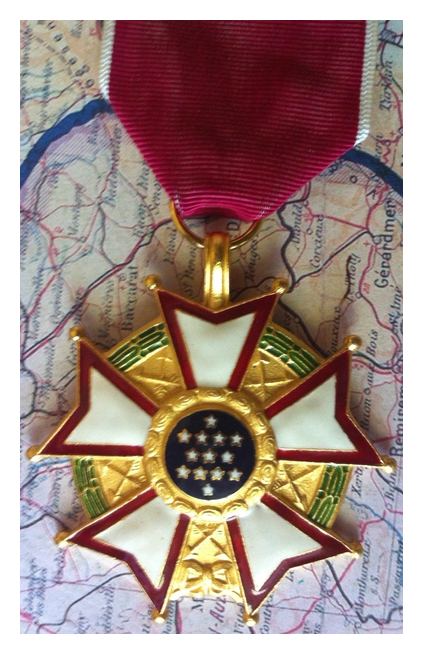
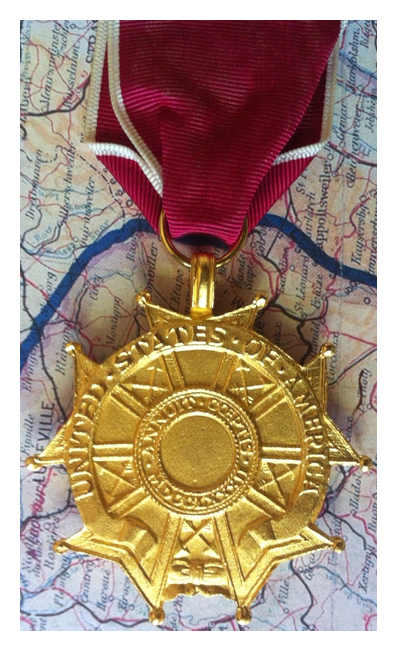
The Legion of Merit (LOM) is a military award of the United States Armed Forces that is given for exceptionally meritorious conduct in the performance of outstanding services and achievements. The decoration is issued both to United States military personnel and to military and political figures of foreign governments.
The Antarctica Service Medal (ASM) was established by the United States Congress on July 7, 1960 under Public Law 600 of the 86th Congress.[2][3] The medal was intended as a military award to replace several commemorative awards which had been issued for previous Antarctica expeditions from 1928 to 1941.