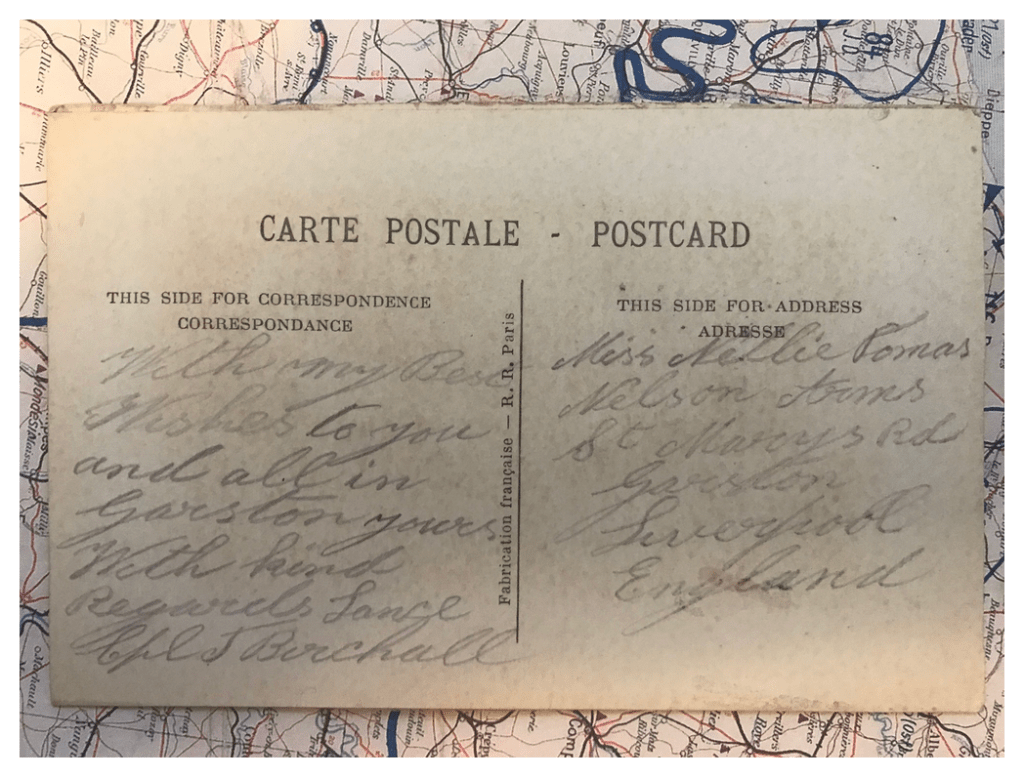
These postcards were very popular, especially with the British troops, during WW1. This particular one has a personal connection being sent by a soldier with the surname of Birchall.
“With my best wishes to you and all in Garston. Yours with kind regards, L. Cpl J. Birchall.”
It is sent to a Nellie Tomas in Garston. Likely one I found in Garston on Ancestry, born in 1900. No sign of a marriage tho so Romeo was unsuccessful.
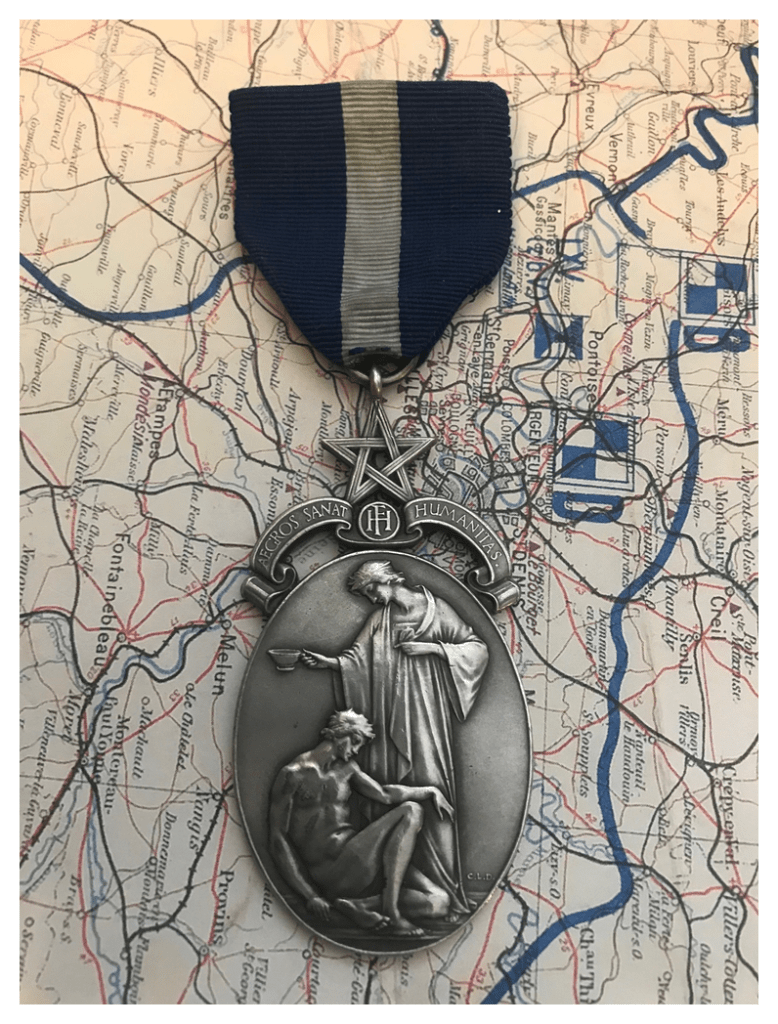
Along with the military medals, occasionally drifts a Masonic medal. This one is the 1930 Royal Masonic Hospital Charity Jewel from 1930. It was awarded to Worshipful Brother J. Birchall of the Robinson Lodge (2046) in Maidstone, Kent.
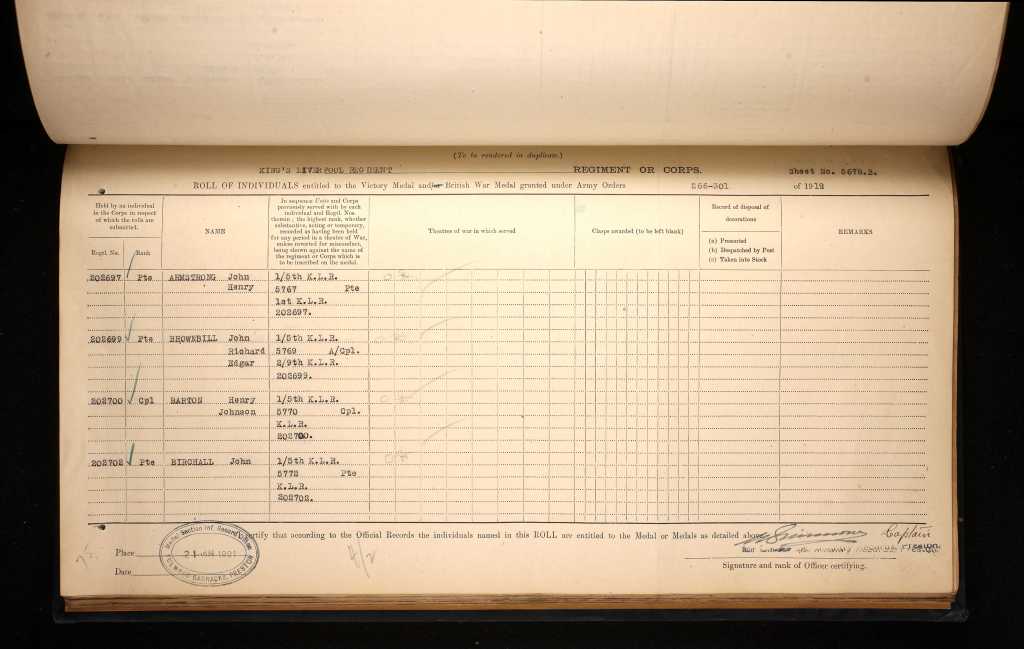
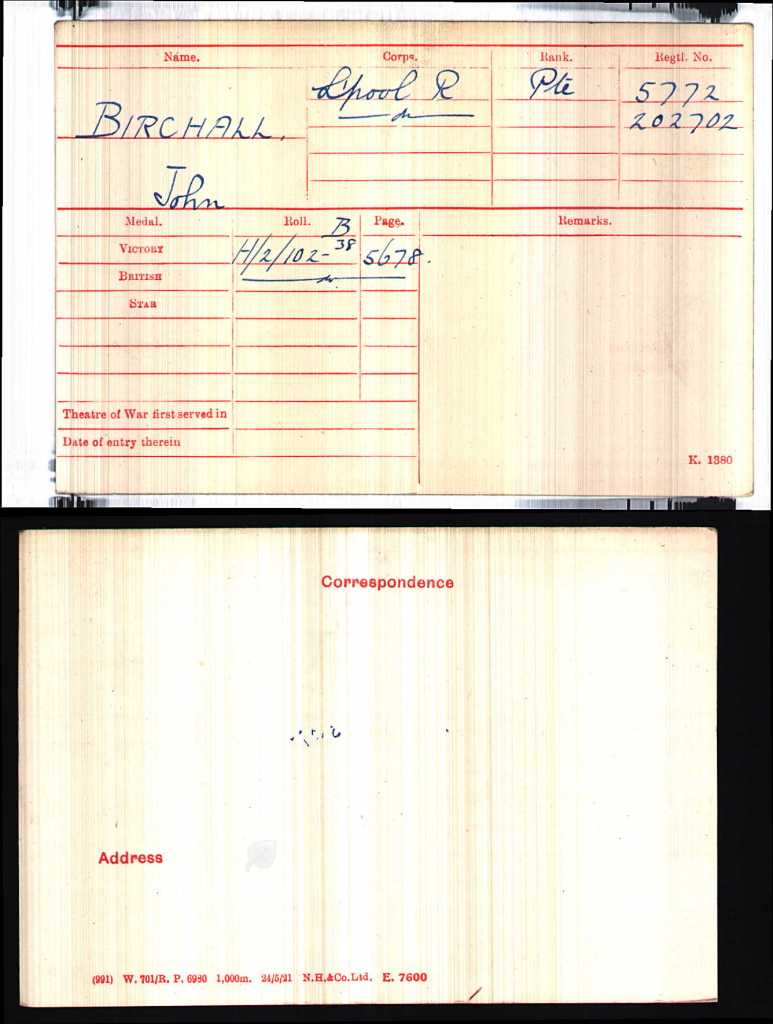
Another ordinary pair of Squeak and Wilfred, the two most common ww1 service medals. These belonged to Private 202702 John Birchall of the Liverpool Regiment.
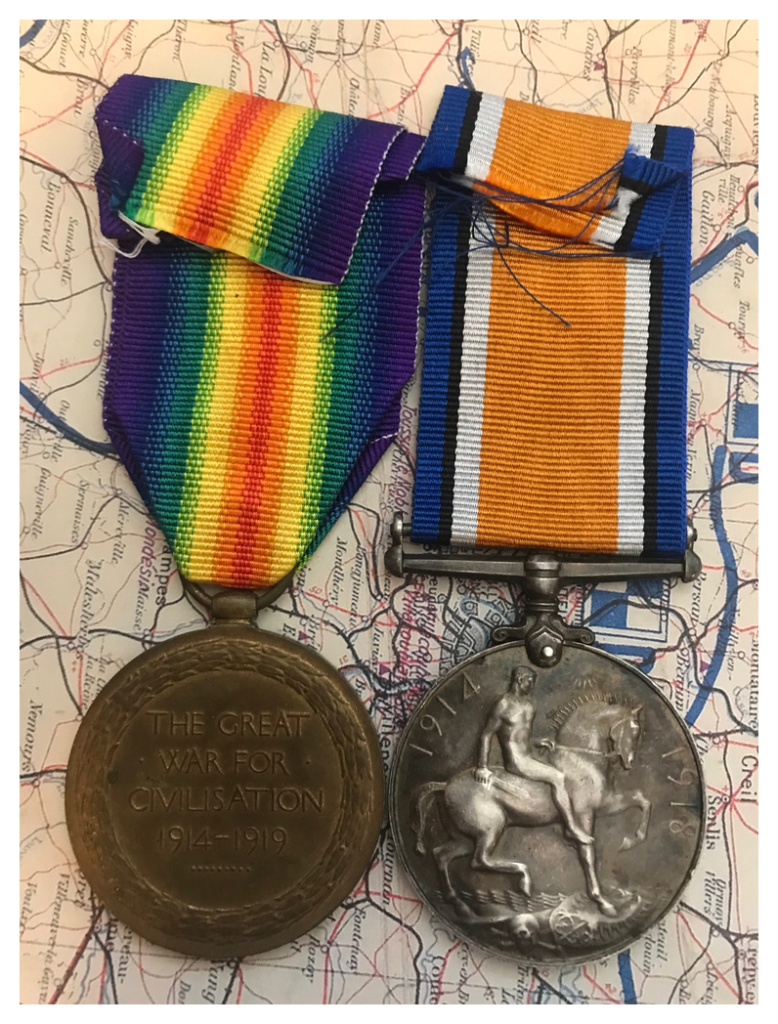
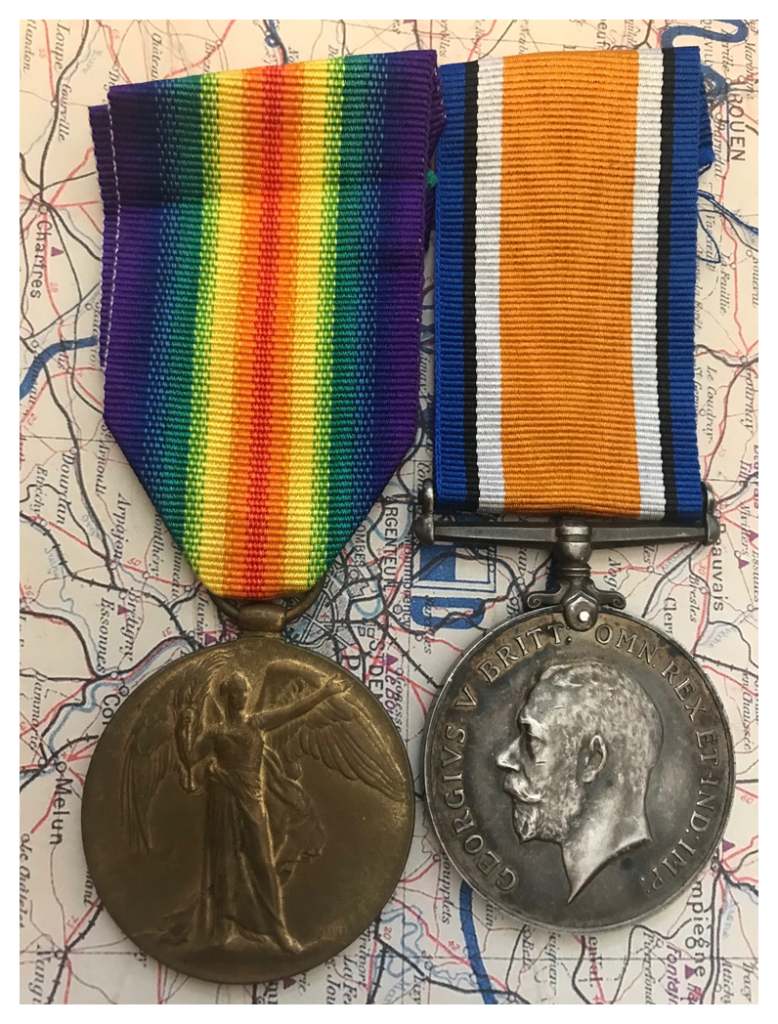
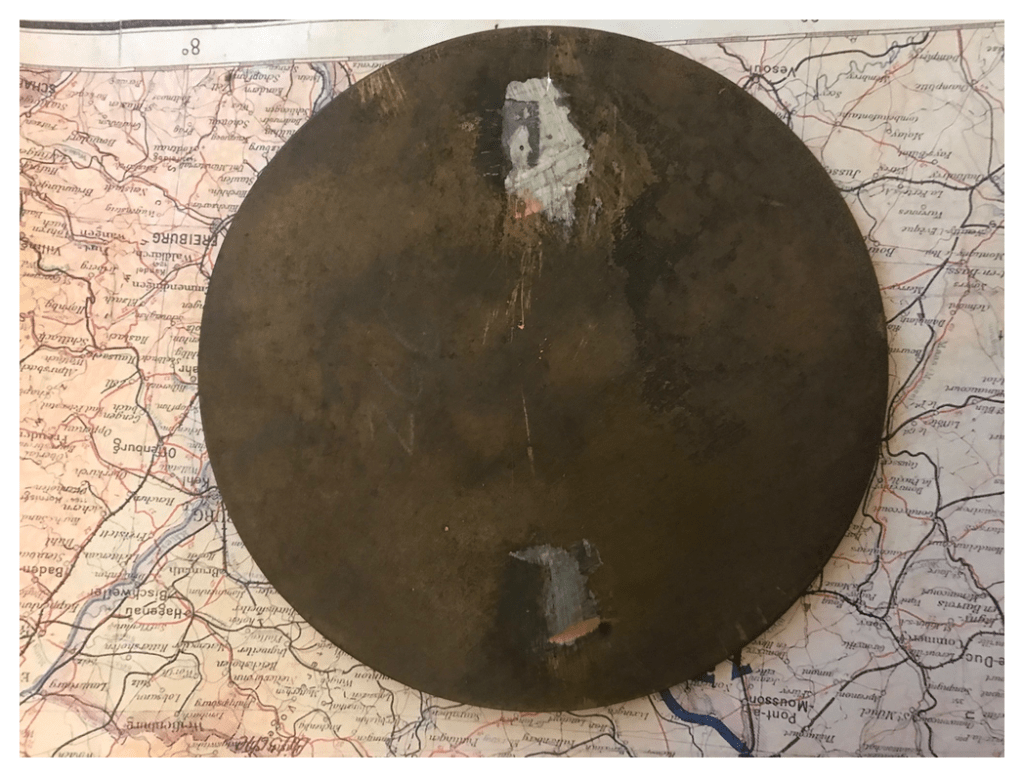
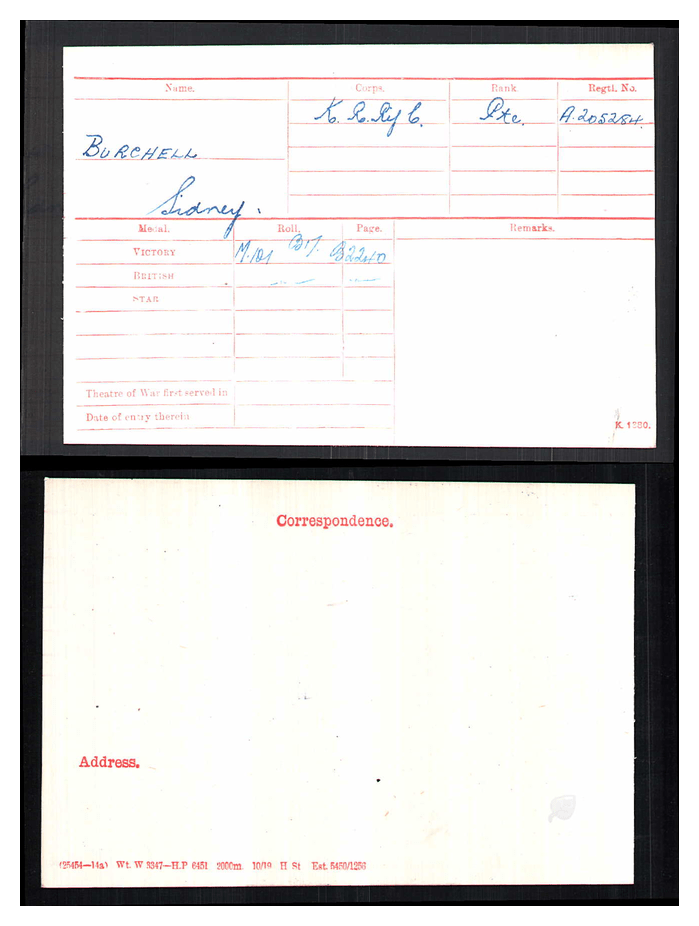
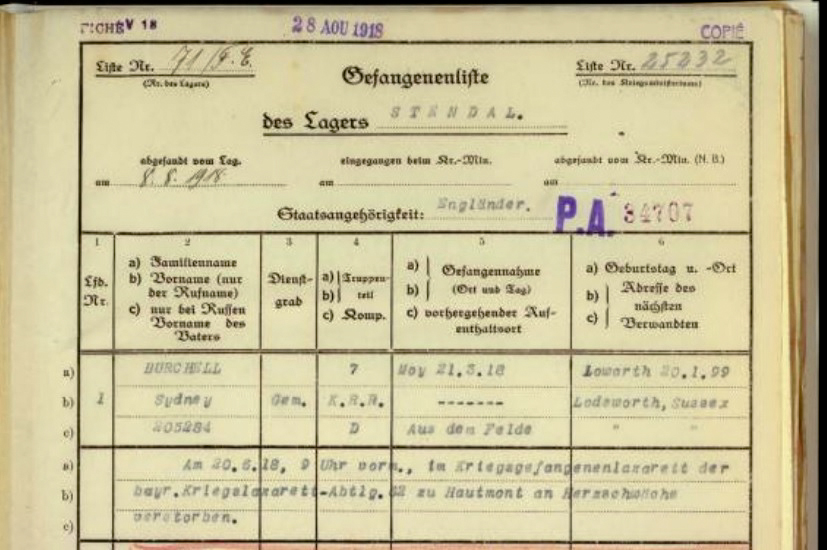
This Death Penny belonged to Sidney Burchell, a Private in the 7th Battalion, King’s Royal Rifle Regiment. Sydney died from illness while a prisoner in Germany on the 26th of June 1918. This is likely not his actual death date as the POW rolls have him dying on the 20th of June. Sidney enlisted in Chichester, initially as TR/10/6344 in a Training Reserve Battalion, probably the 23rd based in Shoreham, although Soldiers Died in the Great War 1914-1919 probably erroneously states the 2nd. Later he became Rifleman A/205284 in the 7th Battalion King’s Royal Rifle Corps, part of the Army’s 14th Division.
Sidney was taken prisoner on 21 March 1918 and held at Camp Stendal, Prussia. He died of kidney infection while in captivity on 20 June 1918 aged 19. [Some current records state he died on 26 June which is likely to be the date of his burial.]
He was buried in grave V.A.11 at the Hautmont Communal Cemetery. Hautmont had been captured by the Germans in the early days of World War 1. The communal cemetery was used by the German troops for the burial of their dead. The Allied prisoners who died in the local German hospitals were buried there too by the authorities of the town.
Sidney is also commemorated on the Lodsworth war memorial.
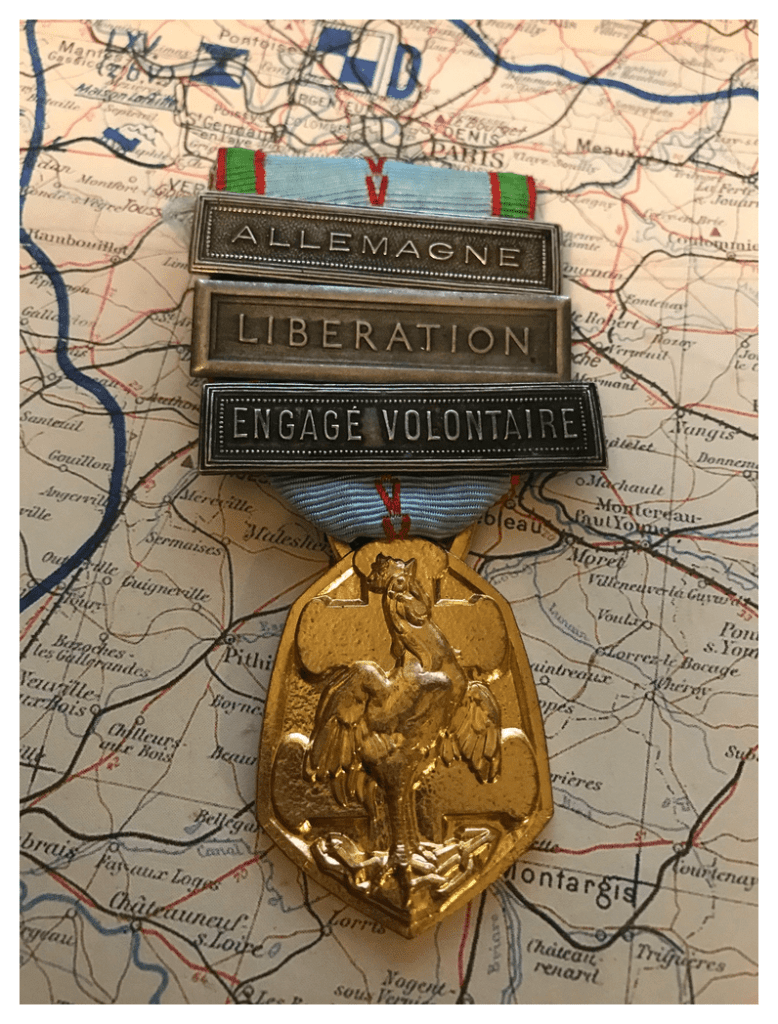
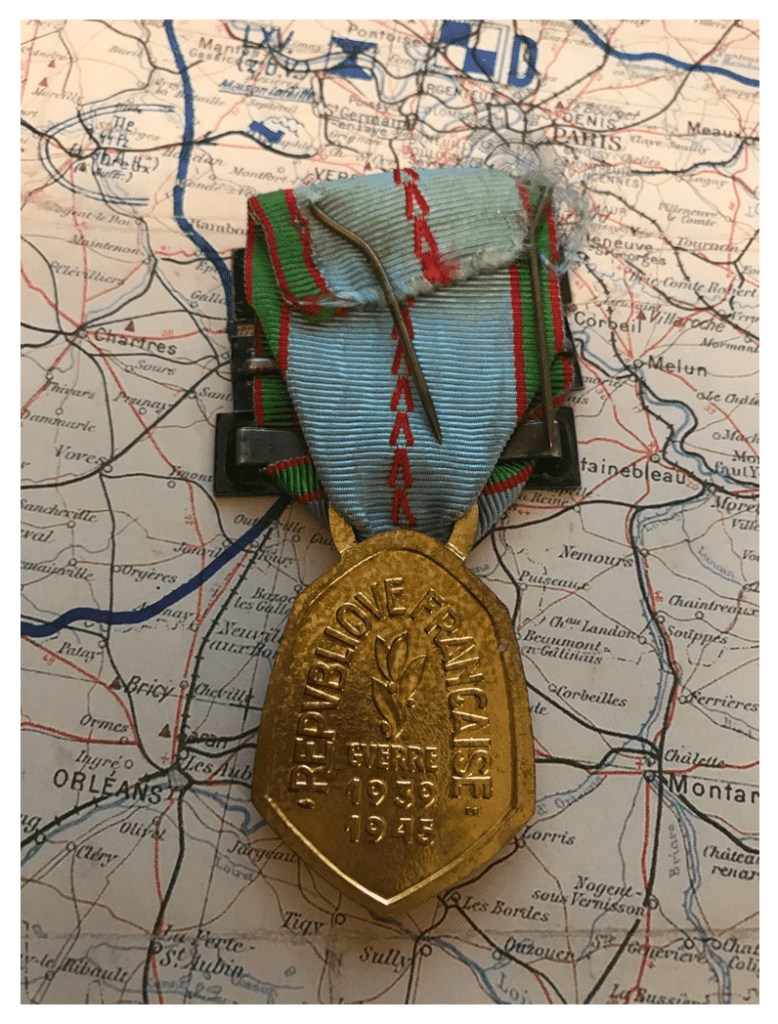
This is a French medal awarded to all participants in recognised formations, fitted with a range of bars depending on the type and theatre of service. In this case the bars are “Allemagne” for all regular forces involved in the German campaign of 1944-1945, the “Liberation” bar for the French Campaign of 1944 and the “Engage Voluntaire” bar to indicate a voluntary enlistment.
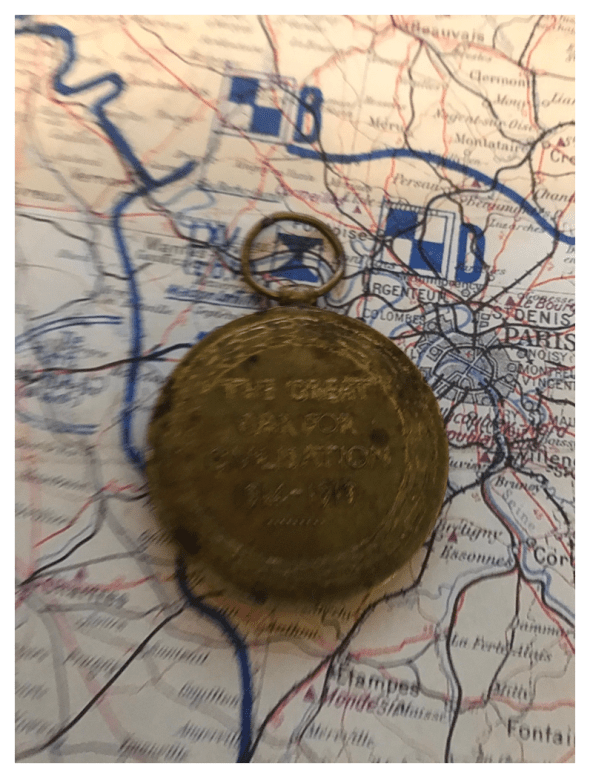
This lonely little WW1 Victory Medal orphan belonged to M2-033111 Private A.J. BURCHELL of the Army Service Corps. Arthur James Burchell entered France on the 18th of July 1915 and was therefore entitled to the 1914-1915 Star in addition to the BWM and Victory Medal. His M2 prefix on his service number indicates that he was an electrician.
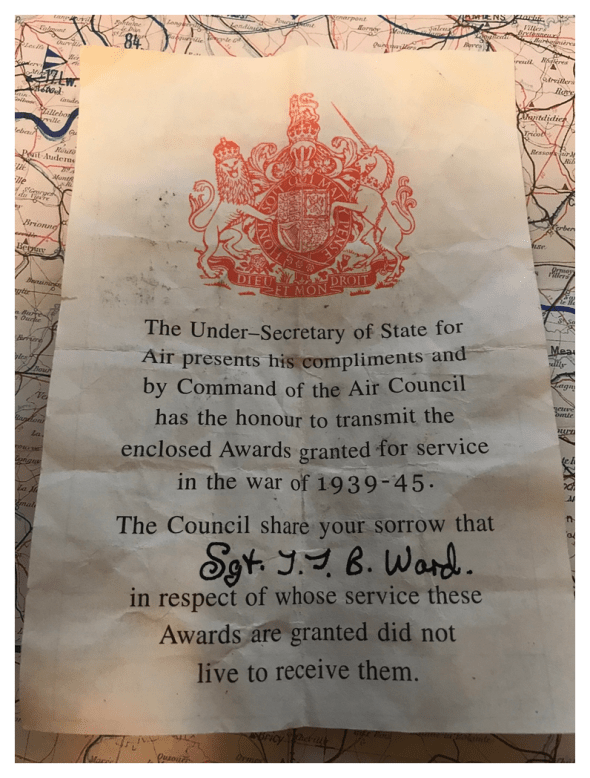
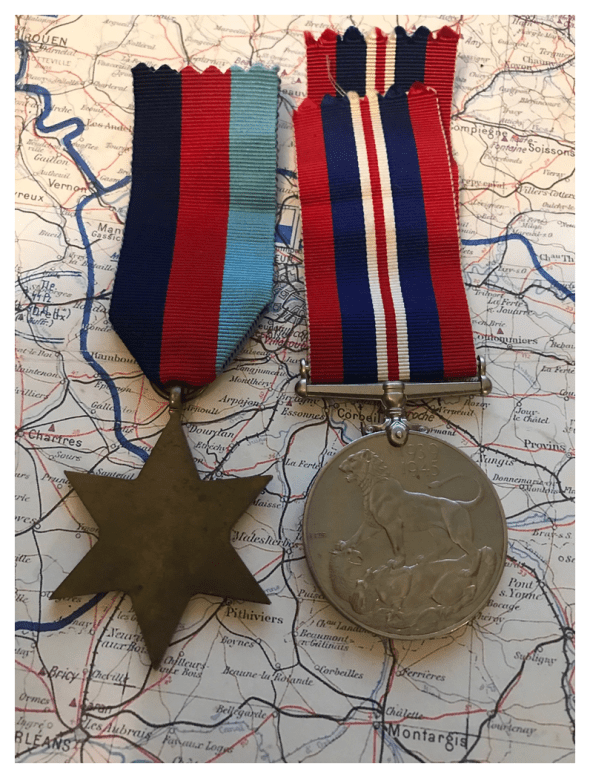
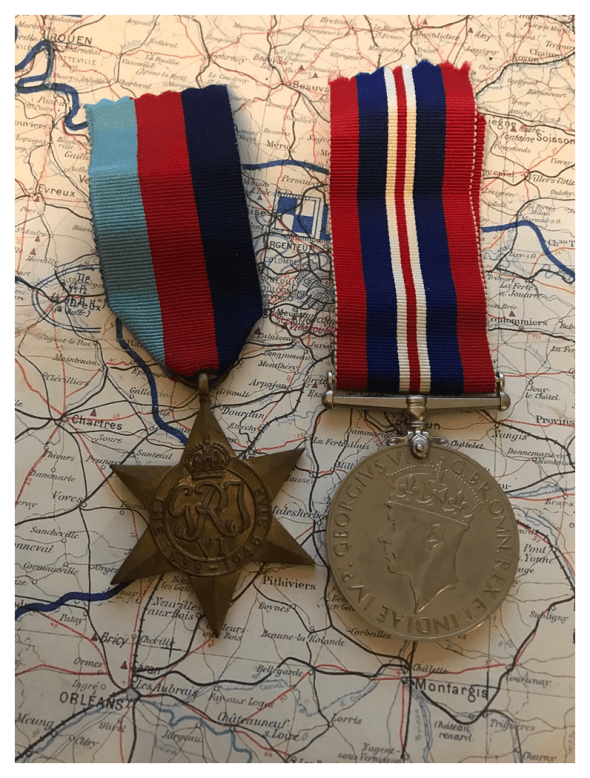
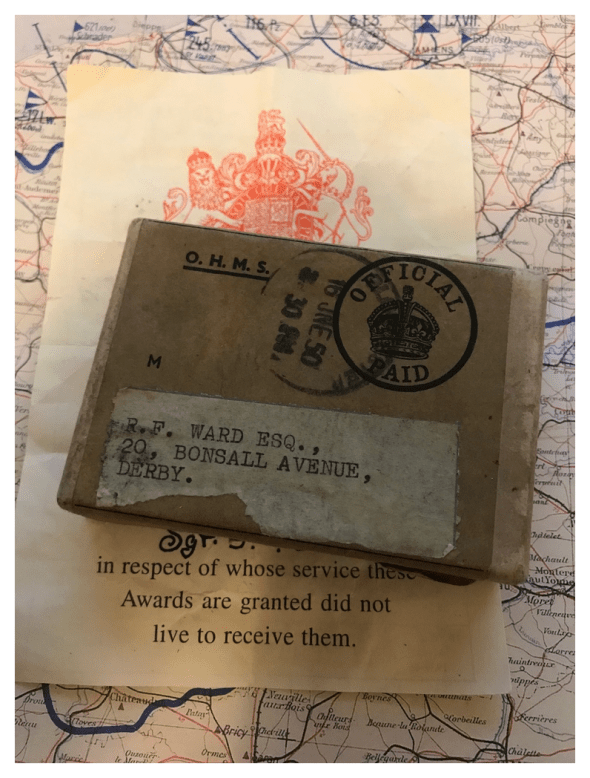
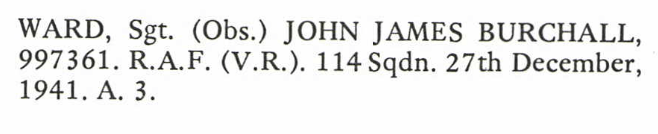
This modest little group belonged to John James Burchall-Ward, 997361, 114 Squadron. John was a Sergeant-Observer in the RAF Volunteer Reserve. He was killed in action on the 27th December 1941 when the Blenheim he was helping to crew was shot down into the sea at the island of Vaagso in Norway during Operation Archery. He is buried in the Møllendal Church Cemetery in Bergen.
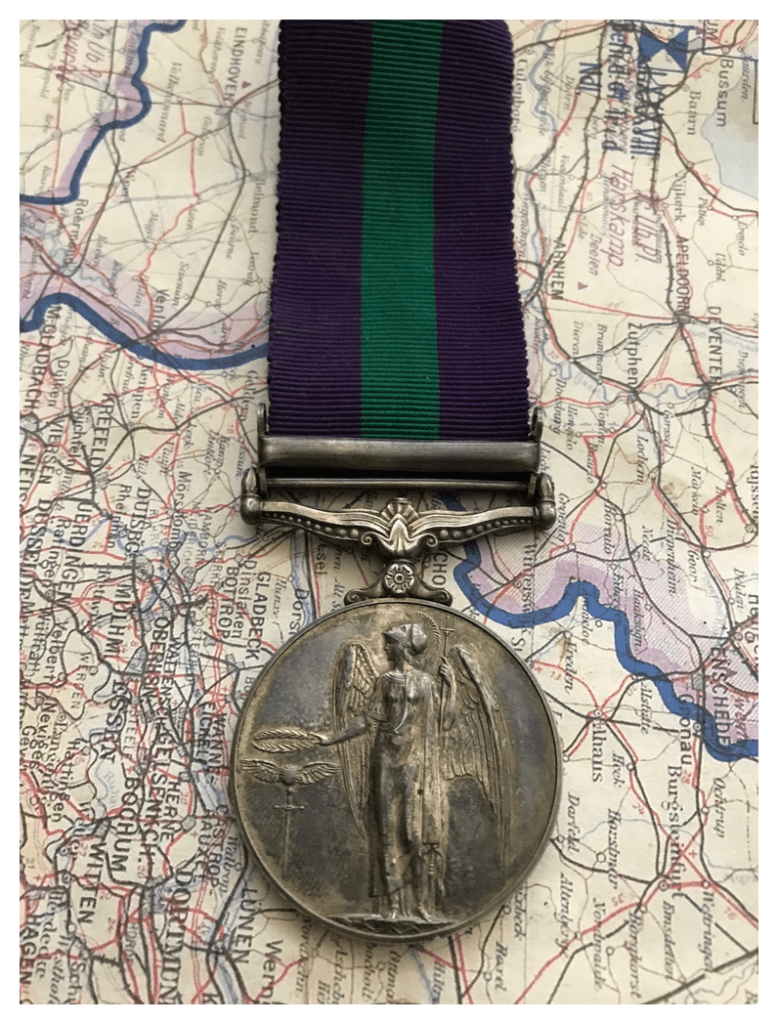
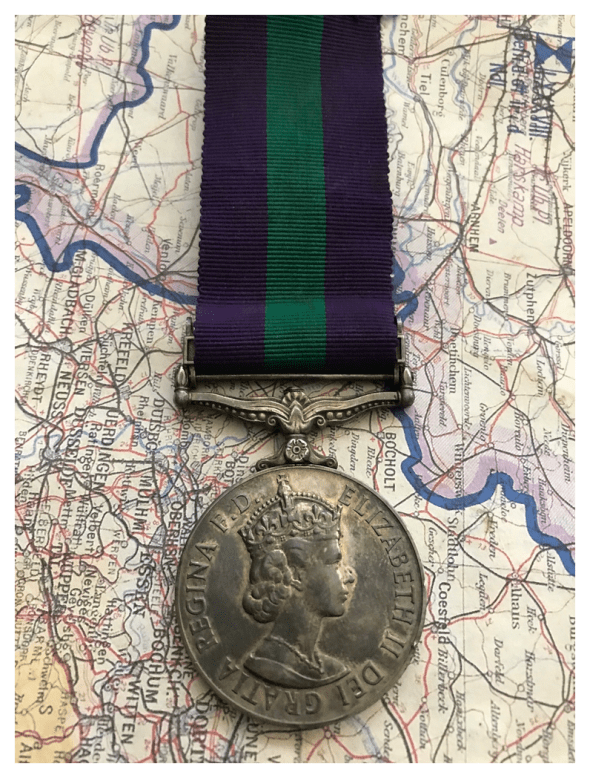
Surprising this week, after a drought of a few months, a plain old garden-variety British General Service Medal (1962). The recipient is Gunner R. Birchall 23381785, Royal Artillery. The lack of any of the 14 possible theatre bars means he didn’t deploy from the UK during his service.
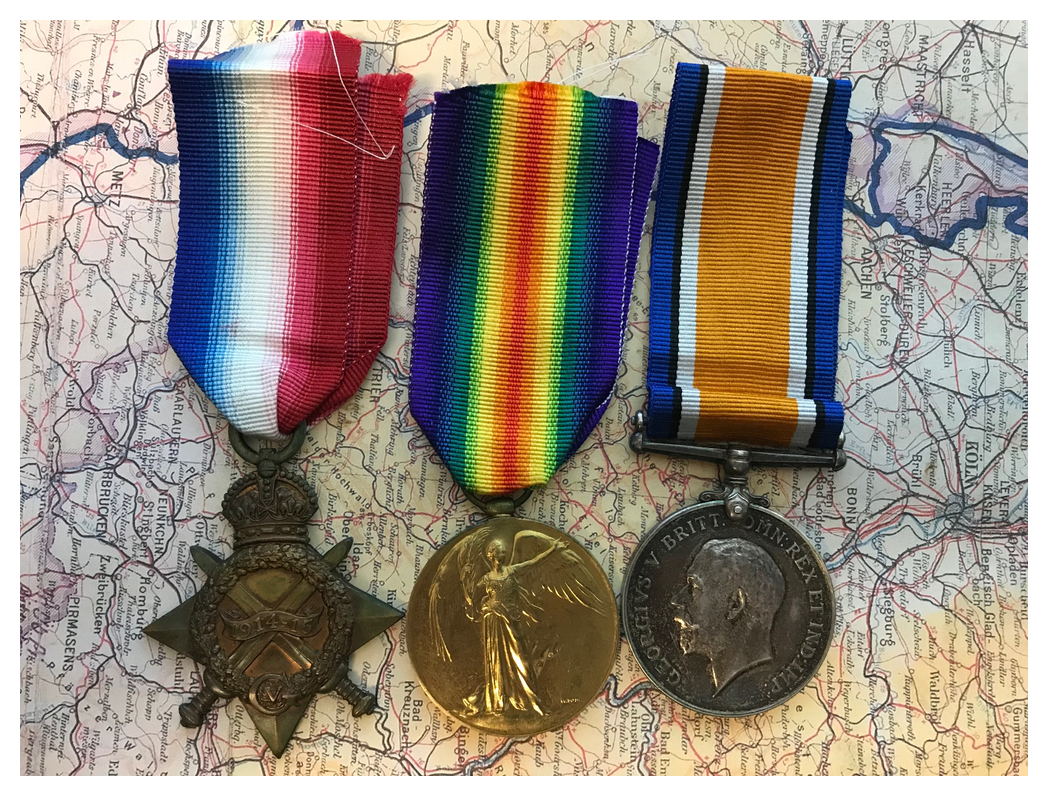
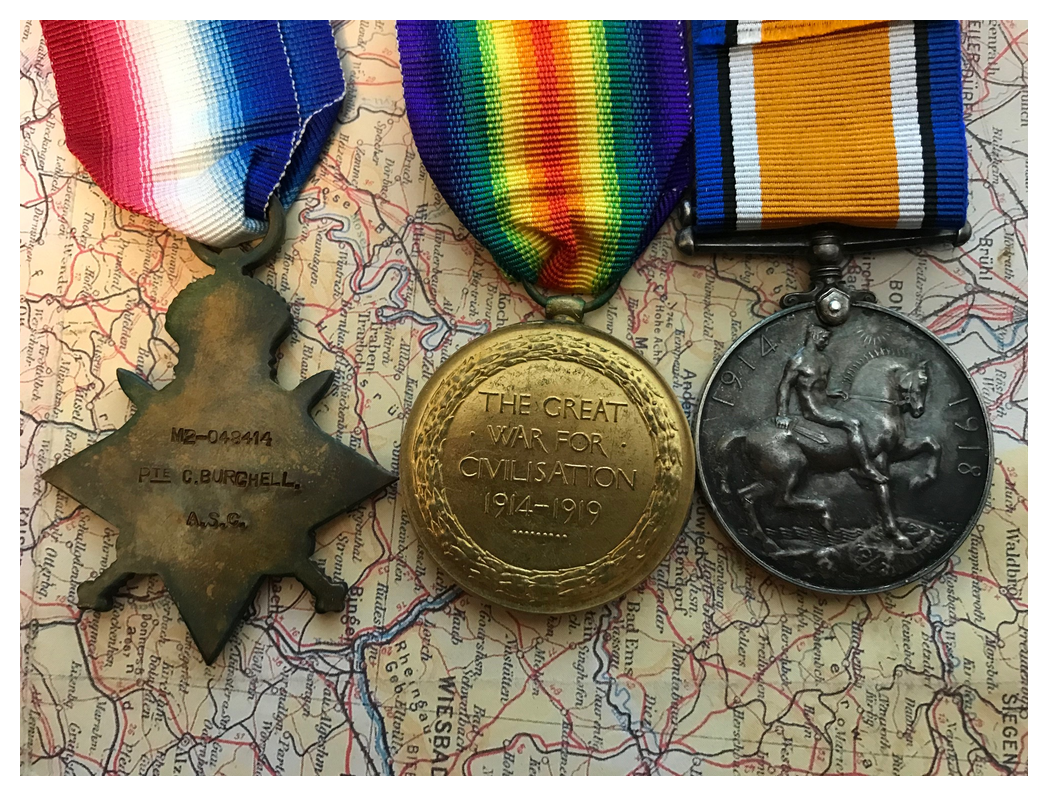
This trio are a 1915 Star, Allied Victory Medal and British War Medal awarded to Private C. Burchell (M2-048414). I haven’t found his first name yet but his army number indicates that he served as an electrician in the Army Service Corps. His record shows he entered France on the 16th of March 1915 and that he was released into the Class Z reserve on the 21st of April 1919. I hope he had a decent war.
This group epitomises why I collect medals to both my surname and its variants. In the 19th Century, surnames were still quite fluid. With many people still being illiterate in the mid-century (~40% of men), the spelling of the surname often depended on the hearing of the recorder. In this group we have a Crimea Medal with Sebastopol Bar and an Indian Mutiny Meda, the latter impressed to SERGT TIMY BIRCHELL, 82 REGT. On the medal roll for Crimea he is recorded as Birchill. On the Regimental roll for India he is spelled Birchile. Either way, Timothy Birchell, 2232, Sergeant in the 82nd (Prince of Wales Volunteers) Regiment of Foot, served and died at Cawnpore, India on the 16th of December, 1857. The Mutiny medal is typical of many casualty medals, never worn and in almost mint condition.
A little big of home-front propaganda. Probably American due to spelling. Late war and part of the dime store effort to make a penny while appearing to support the war effort.
It has been a good month for finding Birchalls on the intertubes. This GVI GSM is impressed to 23522812 PTE J.BIRCHALL RAOC. Because this is a GVI issue GSM, Private Birchall must have served early in the Emergency, prior to 1956. Interesting side note, it was called the Malayan Emergency because if it had been a war, then insurers would have been able to refuse claims for damage.
In my never ending quest to find and reunite medals to my family surname, usually it’s months of dross with the occasional excellent find. This group falls into the latter. This group is impressed to W.O. 2nd Class F.Birchall, 5.D.G and Lt. F Birchall, 5.D.G.
Frederick served in N.W. Europe, landing through Normandy with the Regiment in July, 1944. He fought through Belgium, the Roer and into Hamburg in 1945. After returning to the U.K., the Regiment was sent to Korea, where Frederick was awarded an MID as well as a short service commission as Lieutenant.
The Luneberg Trials began on 17th September, 1945. Officially know as the “Trial of Josef Kramer and 44 others”, this was also known as the Belsen Trial. This is a day pass to that trial issued to Regimental Quartermaster Sergeant Frederick Birchall of the 4th Dragoon Guards, for the 11th of October 1945. I also have an IMT day pass here. The trial resulter in Kramer and ten others swinging from a rope.
Lately I have been finding a few artillery and mortar optics. I like them because they are precision equipment and are quite tactile. The optics viewfinder on this one is a bit different as it has a calculating mechanism for tracking a target traversing the field of view. This one was manufactured by Optische Werke G.Rodenstock in München and has their eso code. It is an Rbl.F.36, which stands for Rundblickfehrnrohr 36. It was used on the Pak-36, 38 & 40 as well as smaller artillery tubes.
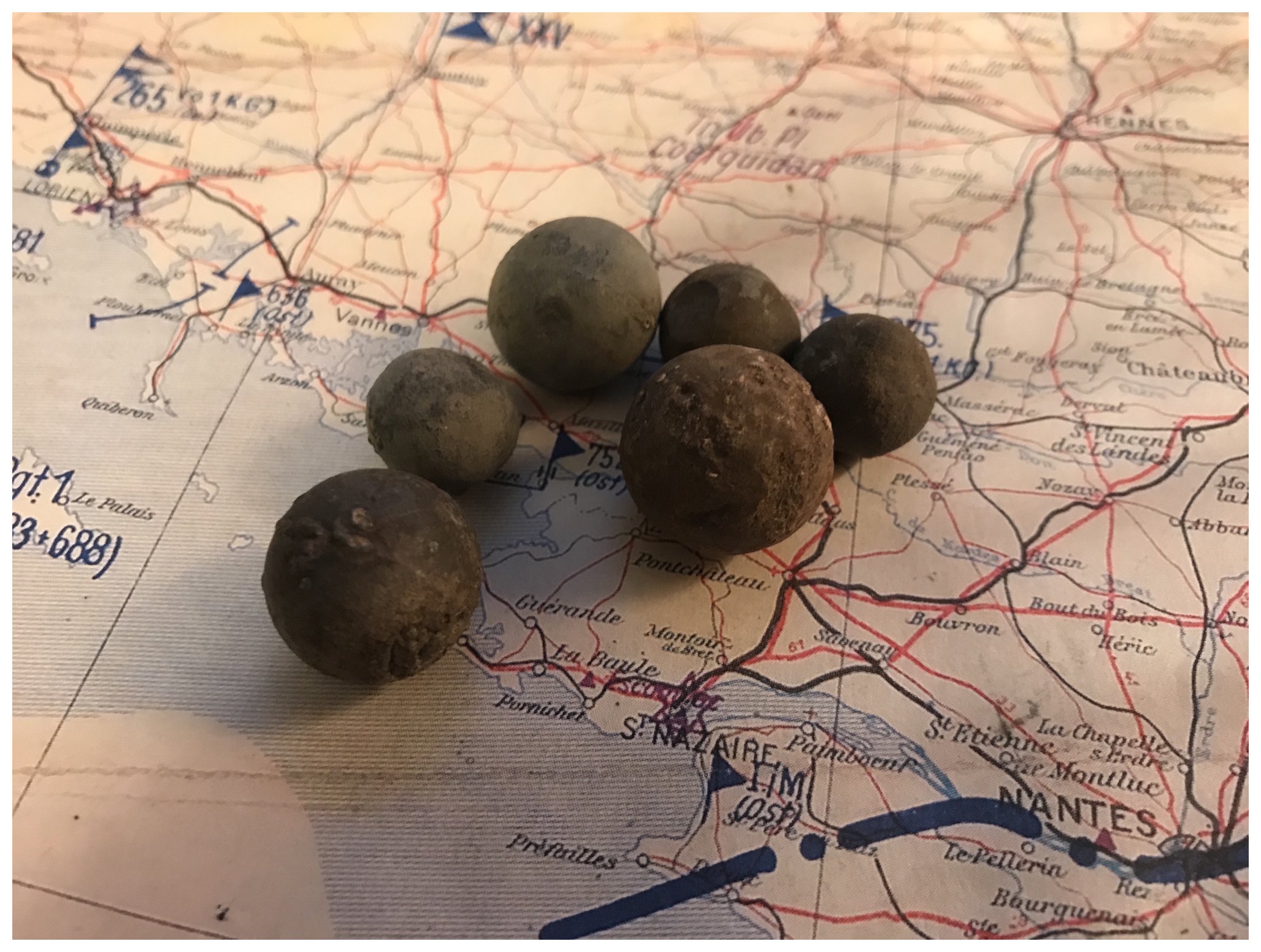
Shrapnel and shell fragments accounted for a large proportion of those killed and wounded in WW1. Those blown into the ether by high explosive to one side, artillery accounted for around 70% of casualties. These six balls were recovered from the Thiepval Redoubt on the Somme and are German in origin. Thiepval was a slaughterhouse on the first day of the attack and, despite early success, took a savage pounding from German counter-fire.
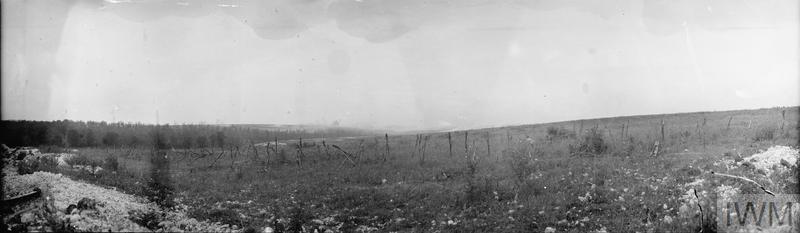
The Battle of Thiepval. The view looking toward Thiepval on morning of attack and showing German barrage. (IWM)
A couple of cool and evocative finds here from a contact in Thailand. These are Thai 1940 dated railway spikes from the ruined railway line that ran over 415 km from Thanbyuzayat in Burma to Ban Pong in Thailand. Many people know it only from it’s depiction in the movie “The Bridge on the River Kwai” where it crosses the Mae Klong river. I visited the site and Hellfire Pass in 2014 and I cannot believe the misery under which the slave laborers, both civilian and Allied POW, must have worked and died. A digger over there walked sections of the rail line that were never reused after the war and retrieved these spikes.
This orphaned British War Medal is impressed to K6690 F.BURCHELL L.STO R.N. Luckily today is Remembrance Day, so the Ancestry military records are free. He was hard to track down because the naming of the medal is in error. It belonged to George Victor Burchell, born in Preston in 1896. He joined the Royal Navy as a boy of 12. He served in both WW1 and WW2, however, all of his service post WW1 was on shore stations like HMS Defiance and HMS Vivid. He had postings on HMS Eagle both in 1918 as well as the next Eagle in the mid 30’s. His trade was listed as jeweller/watchmaker and since most of his berths were at torpedo training establishments, I think he most likely serviced the mechanisms in torpedoes. His rank on the medal was Leading Stoker, his final rank in 1942 was Leading Petty Officer.
This single is a WW1 Victory Medal belonging to William Birchall. It is impressed to 20177 Pte. W. Birchall Essex R. William deployed to the Balkans on the 19th of September 1915. He was discharged on the 30th of March 1917 under category 16, “No longer fit for war service”, in this case because of wounds. William was also entitled to the Silver Wound Badge 152379.
What is fantastic about this humble medal is that I already had his 1914-15 Star from back in 2013 so getting these back together is very satisfying. I am still missing the BWM but my search goes on.
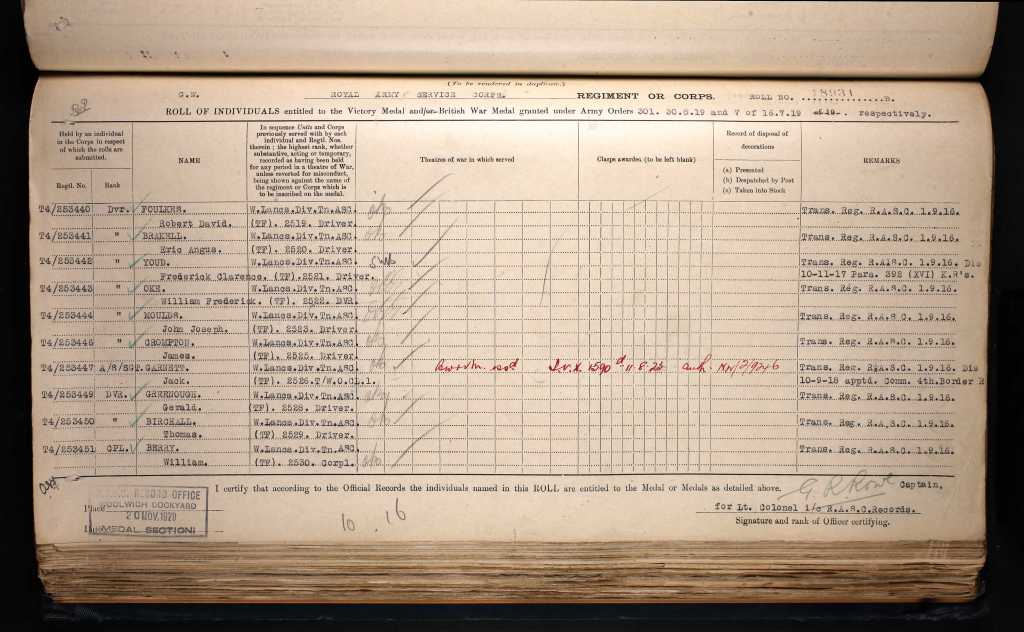
This lonely little Victory medal was awarded to Thomas Birchall, 2529, a Driver in the Army Service Corps in WW1. I can’t find much on him but I can see by his entitlement card that he was awarded the Territorial Force Efficiency Medal in 1920. Both this and his British War medal are lost to time unfortunately.
Here’s an odd one. We have our share of military imposters today, slipping into a uniform and slapping on a bunch of undeserved medals in order to gain the eye of the ladies. They call them “Walts”, after the deluded central character in the 1939 book, “The Secret Life of Walter Mitty”.
Now it appears I have one from the 19th Century. This medal, a Crimean Medal with Sebastopol, Inkermann and Balaklava bars is inscribed to Captain Basil Herne Harper Birchill 1854-5-6. Researching Basil tells me that he was a member of the minor gentry from Middlesex. His surname was Diprose at birth but he was able to change his name to Birchall upon the death of Lt Col. Herne Harper Burchell in 1858 (probably due to either a remarriage of his mother or an illegitimate issue). He did indeed serve in one of the County militia, the Royal Bucks. However as far as I can see he never made it to the Crimea. I see a record of him connected to the British Italian Legion which replaced British troops in garrison on Malta during the Crimean War. And he seemed to be busy in organisations like the Cinque Ports Corps (basically a bunch of rifle clubs) and the Royal Geographical Society. However I sincerely doubt that he left Britain and this medal is a self award. Pompous little classist pommie prick. I would say I’d plant my boot into his nuts if I met him today.
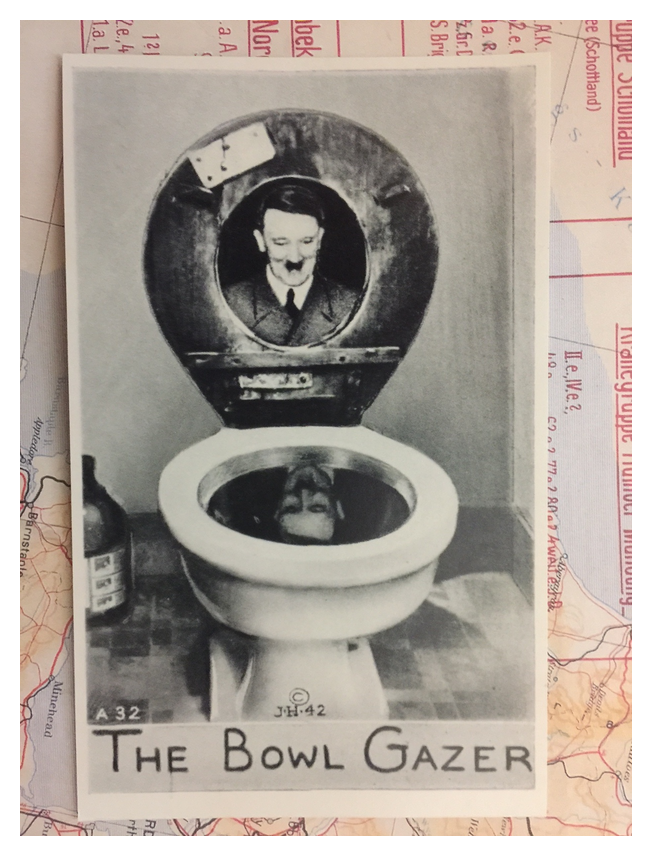
Another simple bit of propaganda, mocking the Fuhrer. Looking at the material that propagandists used to attack the Germans, it focused mostly on Adolf Hitler. He was characterised as being a carpet biter, portrayed as a monkey or a rat or, as in this example, there was a toilet joke in there somewhere. This looks mid-war American, unofficial and designed for the home front. Let’s say it together, Fuck Hitler.
A pretty common trio to a English soldier on the Western Front. The group is named variously to PTE. or L/CPL J.BURCHELL 3553 R.LANC.R. John Burchell entered France on the 6th of October 1915 and is therefore entitled to the 1914-15 Star. He doesn’t show up on the CWGC website so it appears he made it through alive.
This is another Tippco vehicle. This is intended to represent a half track prime mover, a vehicle intended to tow artillery. These were made between 1937 and 1942. Tippco struggled to get support/materials to continue manufacturing after the outbreak of war but they were well known pre-war for the quality and detail of their models. This example has chain rear tracks. It is missing a rear spare wheel and its key which sends me off to the internet to resolve. Update: found a key. Now just need the wheel. Updated Update: found the wheel. Shit I am awesome at Google.
You know if you are going to import the parts for a ballistic missile, you can’t beat Deutsche Post. This is the Oxygen Mixing Nozzle, from the burner cup of a V2 rocket. It came from a dig in Pennemunde on the Baltic coast of Germany, where these things were designed and built. Pretty much the smallest part but hey, it’s a bit of Vengeance Weapon!













 A little big of home-front propaganda. Probably American due to spelling. Late war and part of the dime store effort to make a penny while appearing to support the war effort.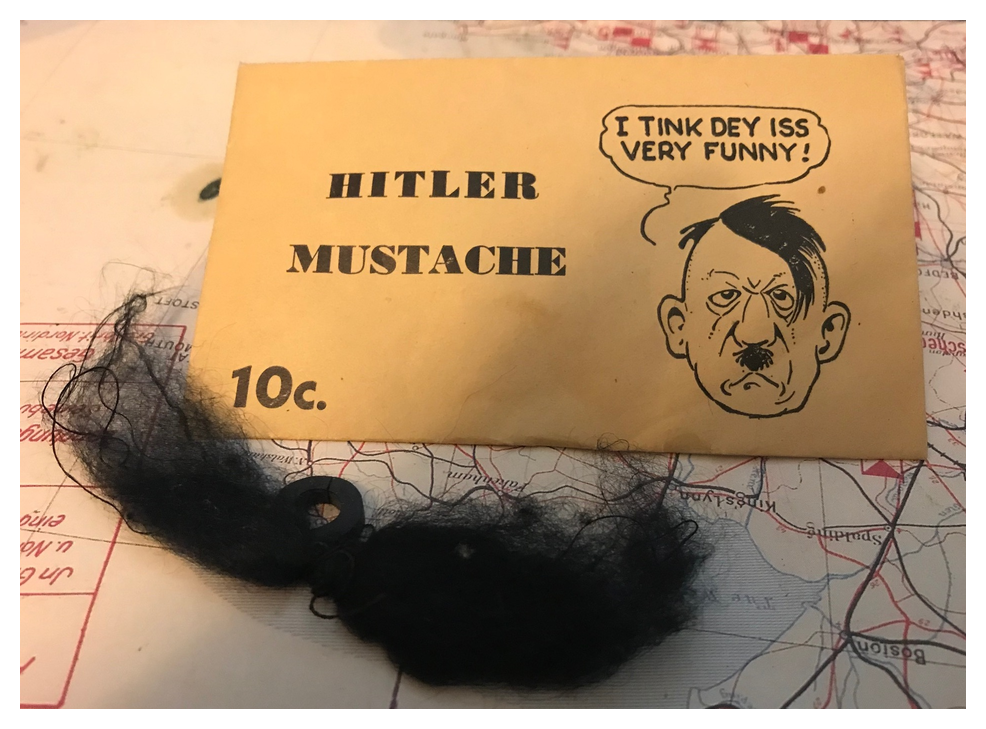


 The Luneberg Trials began on 17th September, 1945. Officially know as the “Trial of Josef Kramer and 44 others”, this was also known as the Belsen Trial. This is a day pass to that trial issued to Regimental Quartermaster Sergeant Frederick Birchall of the 4th Dragoon Guards, for the 11th of October 1945. I also have an IMT day pass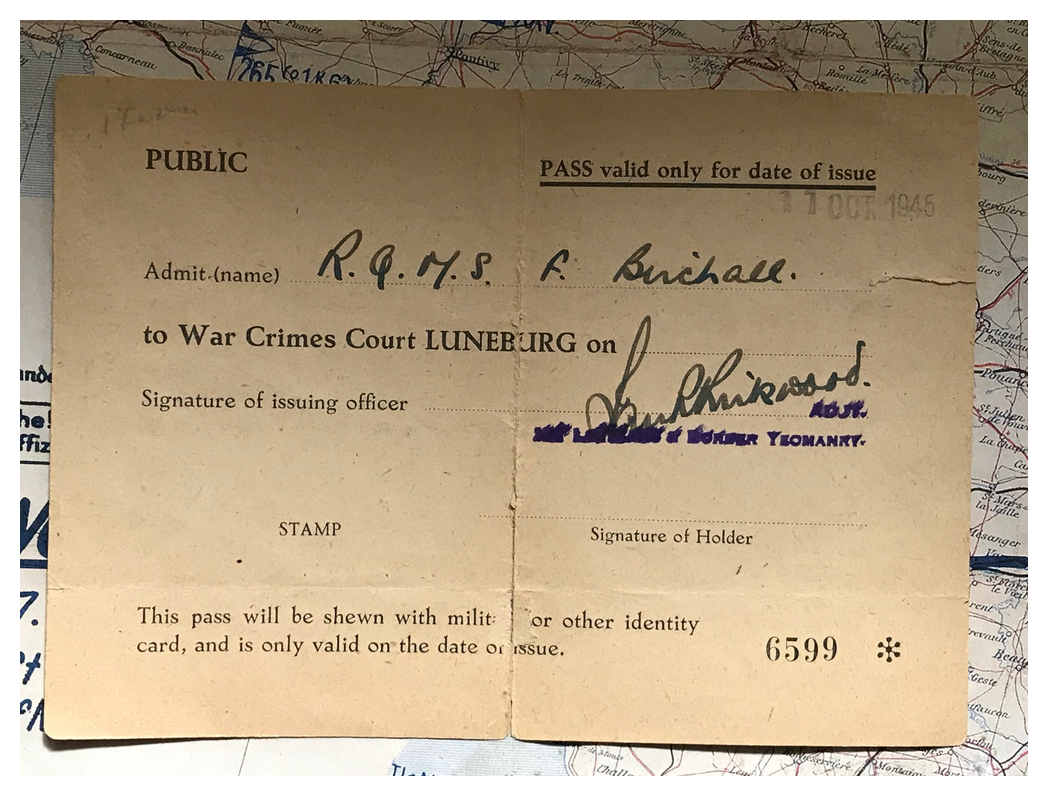








 Kiwi Medals